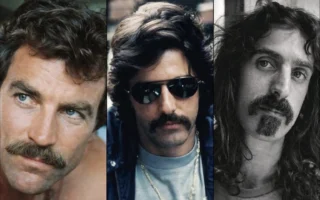
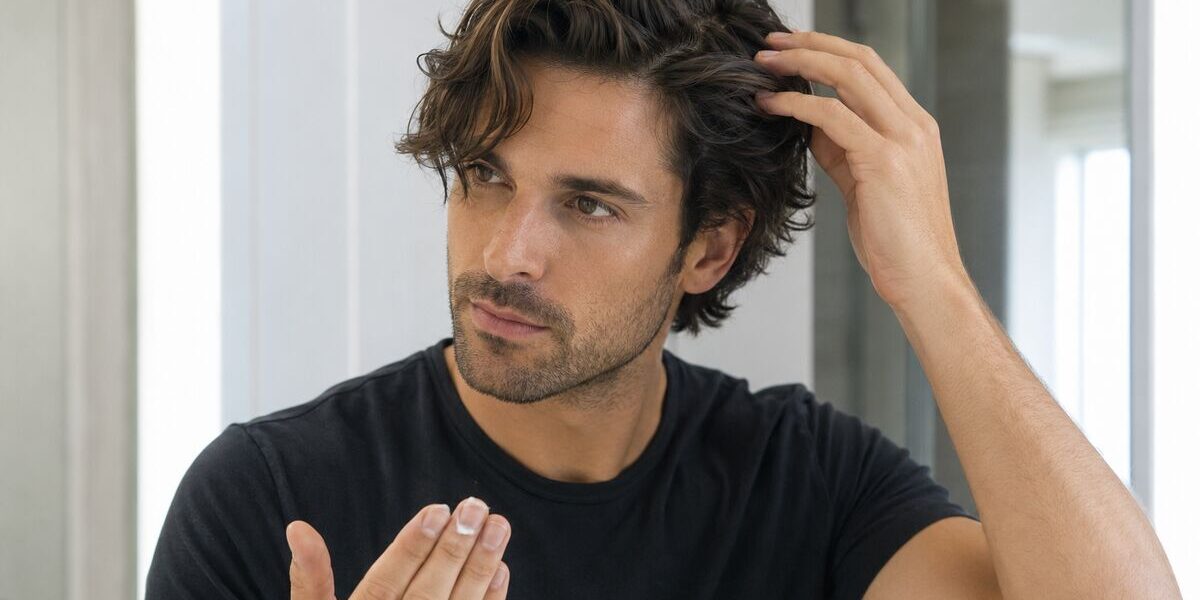
Timothée Chalamet’s hair looks spontaneous, but the shape depends on deliberate weight placement. The Timothée Chalamet haircut is a medium-to-long layered flow that preserves natural waves, keeps the front slightly longer, and avoids tightly faded sides.
There was no single official debut. However, GQ documented a defining version in February 2018. Hairstylist Thom Priano worked with chin-length hair, removed about 2.5 inches, and created textured long layers using a razor.
The result was soft, separated movement rather than rigid curls or a sculpted quiff.
Quick Facts
| Feature | Timothée Chalamet Haircut Details |
|---|---|
| Haircut family | Medium-length layered flow or soft wavy shag |
| Defining feature | Natural waves with loose, irregular separation |
| Documented technique | Long razor-cut layers, slightly longer in front |
| Overall length | Long enough to reveal the full wave pattern |
| Sides | Scissor-cut with no tight fade |
| Front | Longer, flexible, and able to fall across the forehead |
| Parting | Loose centre, off-centre, or natural break |
| Finish | Soft shine, flexible hold, and controlled volume |
| Best texture | Naturally wavy or loosely curly hair |
| Styling time | About 10 to 20 minutes |
| Salon maintenance | Usually every 8 to 10 weeks |
| Current variation | Natural curls with stronger nape length and mini-mullet influence |
What Is the Timothée Chalamet Haircut Called?
The most accurate description is a medium-length layered wavy flow. Depending on its length and finish, a stylist may also call it a soft shag, grown-out layered cut, or curly flow haircut.
It is not a traditional curtain haircut. Curtains require a more obvious centre division and balanced front panels.
It is also not a conventional mop top. A mop top has a rounder and more uniform perimeter.
Chalamet’s hair has visible variation between the front, crown, sides, and nape.
Byrdie has classified one of his longer versions as a wavy shag with an organised-chaos effect. The longer waves create dimension by moving in several directions.
The Documented Cut Behind His Signature Flow
The clearest technical account comes from Thom Priano, who prepared Chalamet for a 2018 GQ cover.
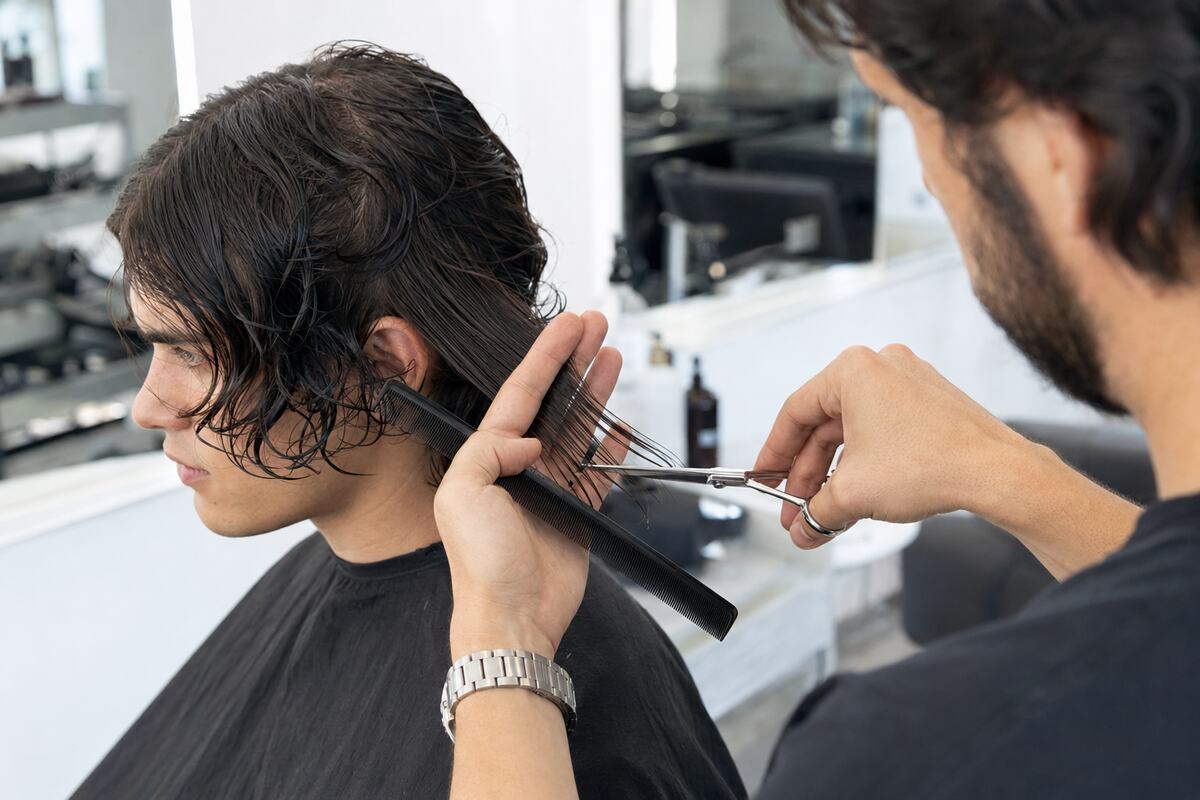
Priano started with hair that was at least chin length. He removed around 2.5 inches with a razor, leaving long layers slightly longer at the front than the back.
That detail matters. The longer front creates the recognisable swoop across the forehead.
It also allows curls to frame the eyes without forming a short, rounded fringe.
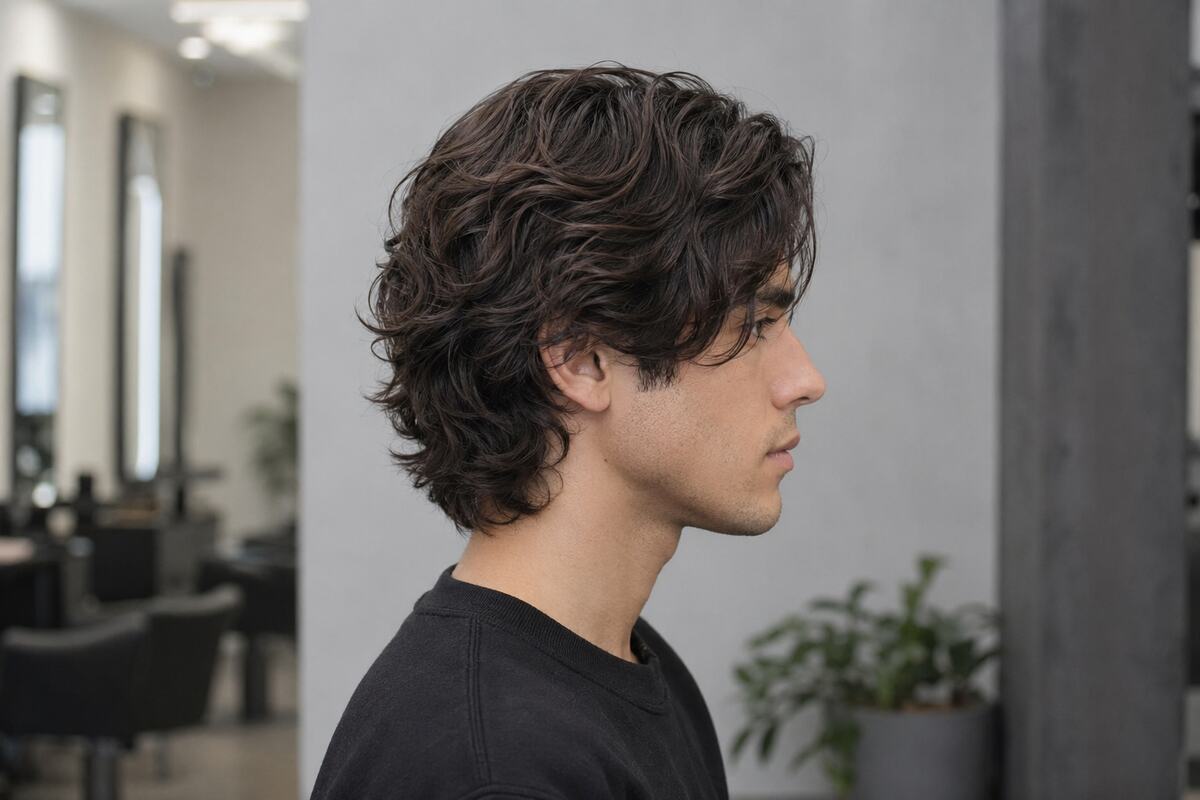
The back remains connected to the sides. There is no abrupt undercut, disconnected crown, or exposed skin fade.
Why Razor Cutting Worked
A razor removes weight while creating a softer edge than a straight, blunt cut. On dense, healthy waves, this helps sections separate naturally.
The technique also prevents the haircut from forming a triangular shape. Without internal weight removal, medium-length wavy hair can become wide near the ears and flat at the crown.
Razor cutting is not suitable for every client. Fragile, highly porous, or severely damaged hair can become frizzier when heavily razored.
For those clients, I would use controlled point cutting instead. Point cutting removes weight without stripping as much strength from the ends.
Why the Front Must Stay Longer
The front should fall around the cheekbone, nose, or upper-lip area when stretched, depending on curl shrinkage.
It will sit considerably shorter after drying.
Cutting the fringe near eyebrow level while wet usually creates a compact curly fringe. That produces a different haircut.
The longer front also creates several styling options:
- Swept away from the forehead
- Divided into loose curtains
- Dropped forward as one defined curl
- Directed sideways for red-carpet structure
- Pushed back with natural root lift
What to Ask Your Barber or Hairstylist For
Bring photographs showing the front, sides, and back. One frontal image cannot reveal the full weight distribution.
Use this salon brief:
“I want a medium-length layered flow for naturally wavy hair. Keep the front longer than the back, preserve weight around the sides, and avoid a fade. Add long, blended layers for movement. Remove bulk internally without making the ends thin or wispy.”
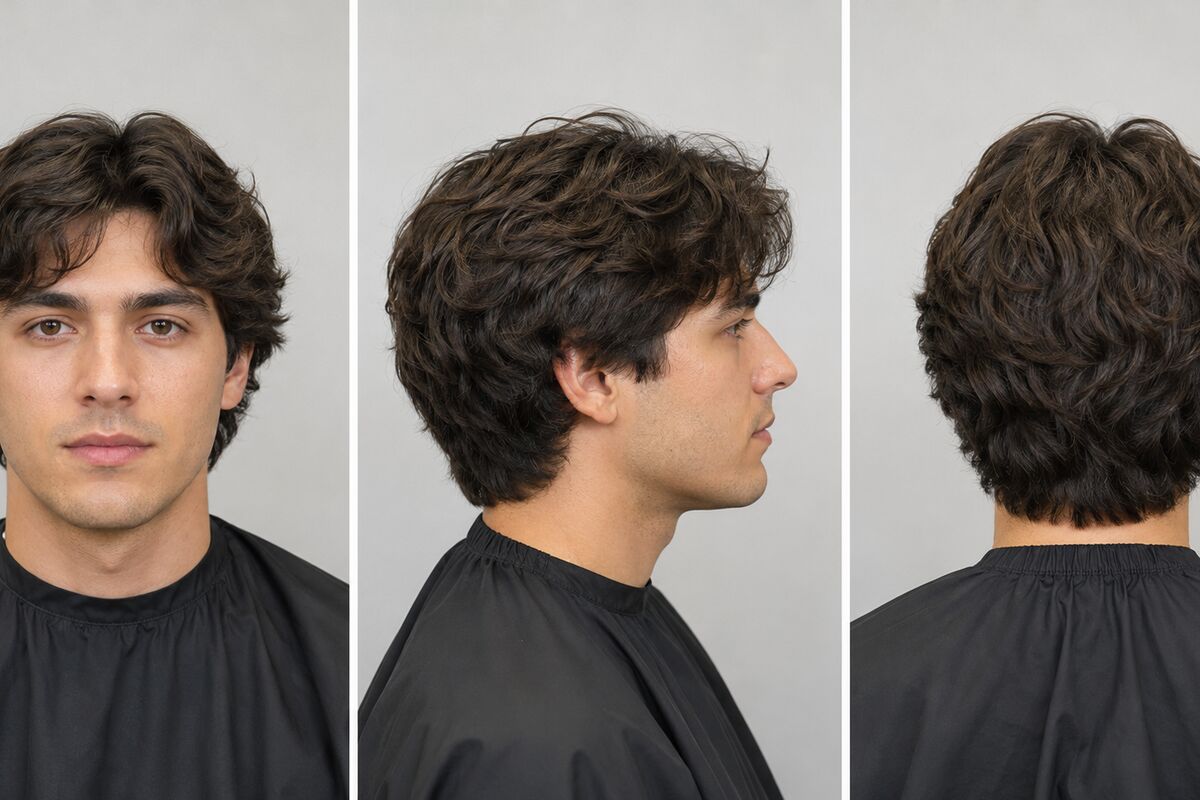
Also ask the stylist to assess your hair after it has formed its natural wave pattern.
A fully stretched wet cut can hide shrinkage. This is especially important around the fringe, ears, and nape.
Suggested Replication Lengths
These measurements are a practical adaptation, not Chalamet’s private haircut record.
| Area | Starting Length for a Medium Version |
|---|---|
| Front and fringe | 12 to 16 cm |
| Top | 10 to 14 cm |
| Upper sides | 8 to 12 cm |
| Around the ears | 6 to 9 cm |
| Nape | 7 to 11 cm |
The correct length depends on curl pattern. A stronger curl requires additional length to reach the same visual position.
The Sides Should Look Natural, Not Faded
One of the most common mistakes is pairing the longer top with a tight taper fade. That changes the entire silhouette.
Chalamet’s signature style keeps visible hair around the temples and ears. This creates continuity from the top into the sides.
The fuller side profile also balances the height and movement above the forehead. Removing that weight can make the top appear disconnected or excessively wide.
British GQ’s coverage of his mini-mullet variation noted that the sides showed no taper fade or exposed skin. The front retained lifted waves, while the back remained longer and shaped away from the neck.
Timothée Chalamet’s Hair Colour and Finish
Trusted GQ and Vogue coverage does not publish a salon colour formula for his signature brunette hair. Claims about a specific dye, gloss, balayage, or root-smudging formula would therefore be unsupported.
His colour works because it does not compete with the haircut’s movement. A relatively consistent brunette base allows natural highlights and shadows to define each wave.
Someone adapting the look should preserve their natural colour where possible. Hair that has been over-lightened often lacks the smoothness needed for loose, glossy separation.
When colour adjustment is required, request a demi-permanent gloss matched to your natural base. Avoid choosing a very dark, flat shade solely to imitate a photograph.
A colourist should formulate around your starting level, porosity, and undertone. No universal brunette formula will produce the same result on every head of hair.
How to Style Timothée Chalamet’s Natural Wavy Flow
Chalamet has said that his curls come from his natural texture. He has also identified Jamie Taylor as the groomer responsible for many of his public looks.
Taylor’s styling philosophy centres on enhancing movement rather than suppressing it. She uses simple products such as salt spray, paste, and light grooming cream.
She also cuts according to the client’s face, hairline, and natural texture.
Step 1: Start With Conditioned Hair
Wash with a gentle shampoo and follow with conditioner. Hair should feel flexible, not squeaky or stripped.
GQ’s documented 2018 routine began the night before styling. Priano used a cleansing conditioner to produce a softer, slightly lived-in finish rather than freshly washed fluffiness.
After rinsing, squeeze out water with a soft towel. Do not rub the hair aggressively.
Step 2: Apply Lightweight Moisture
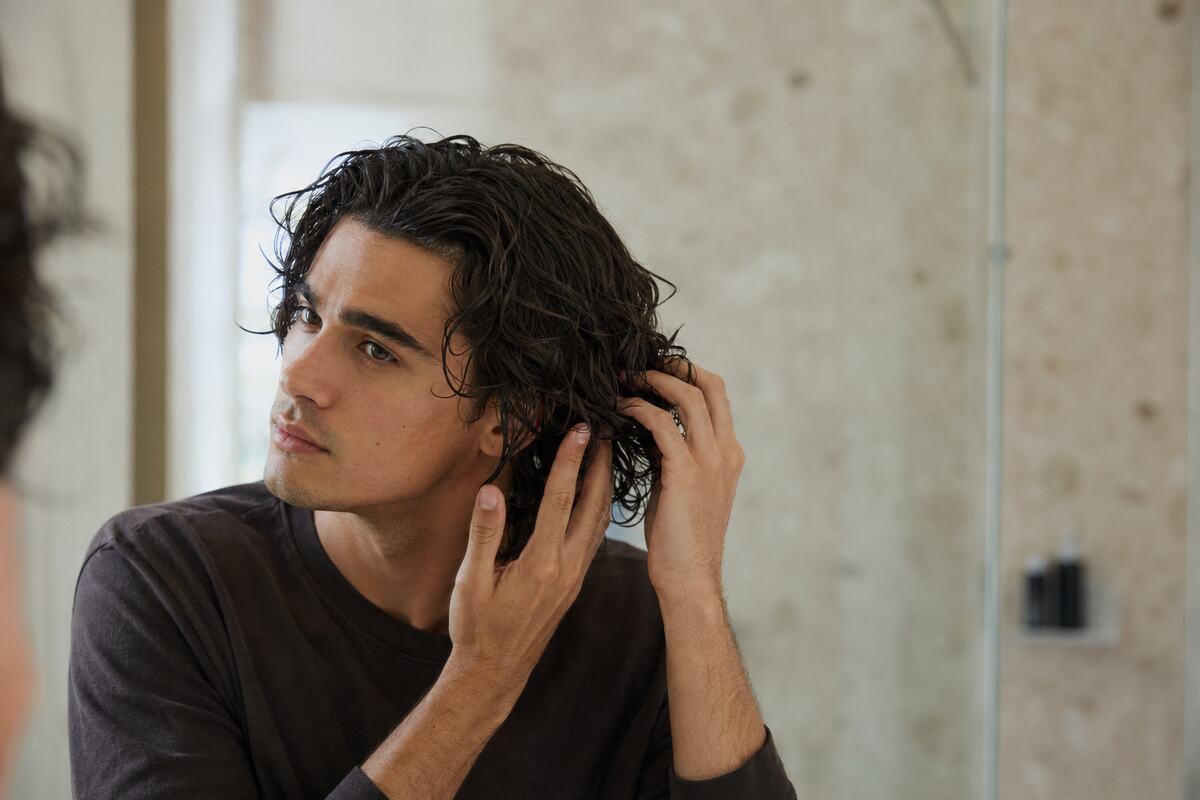
Work a small amount of curl cream or lightweight leave-in through damp hair.
Start at the middle lengths. Use only the residue near the roots.
Fine hair needs less cream. Dense, coarse, or porous waves can accept more moisture without collapsing.
Step 3: Add Texture Selectively
Mist a light salt or texture spray through the crown and upper lengths. Avoid saturating the ends.
Salt spray can improve grip in soft, slippery hair. However, frequent heavy use can leave already dry hair feeling rough.
People with dry curls should use mousse or a flexible curl lotion instead.
Step 4: Set the Direction With Your Hands
Find the hair’s natural part. Do not force a precise centre line.
Use your fingers to lift the roots and place the longer front sections. Twist only two or three pieces that need extra definition.
Twisting every section creates uniform ringlets. Chalamet’s finish depends on irregularity.
Step 5: Air-Dry or Diffuse Gently
Priano hand-dried Chalamet’s hair for the documented GQ look. This preserved the natural curl instead of stretching it with forceful blow-drying.
At home, air-drying gives the softest result.
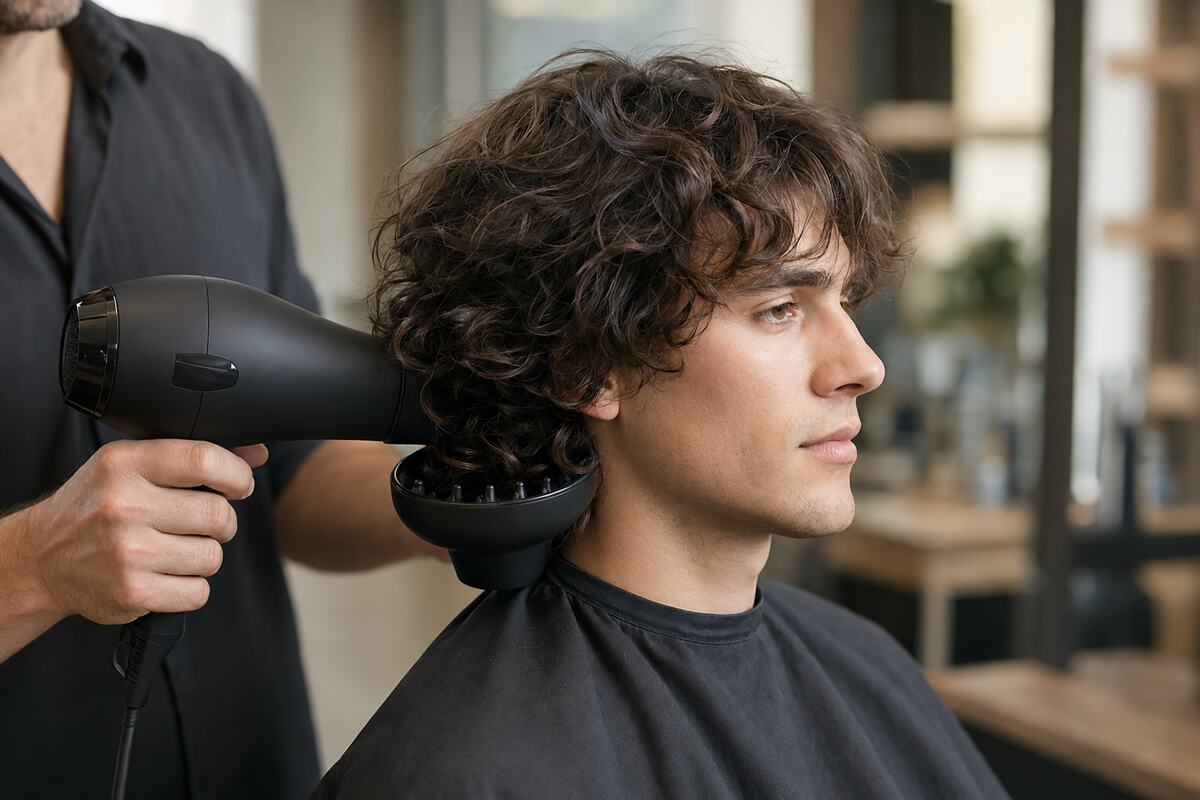
For greater volume, use a diffuser with low airflow and low-to-medium heat. Cup the ends without repeatedly pushing the diffuser against the scalp.
Stop when the hair is about 90 per cent dry. Let the remaining moisture evaporate naturally.
Step 6: Break the Cast and Finish
Once fully dry, loosen the waves with clean fingertips.
Emulsify a pea-sized amount of paste or grooming cream between your palms. Press it lightly into the ends and front sections.
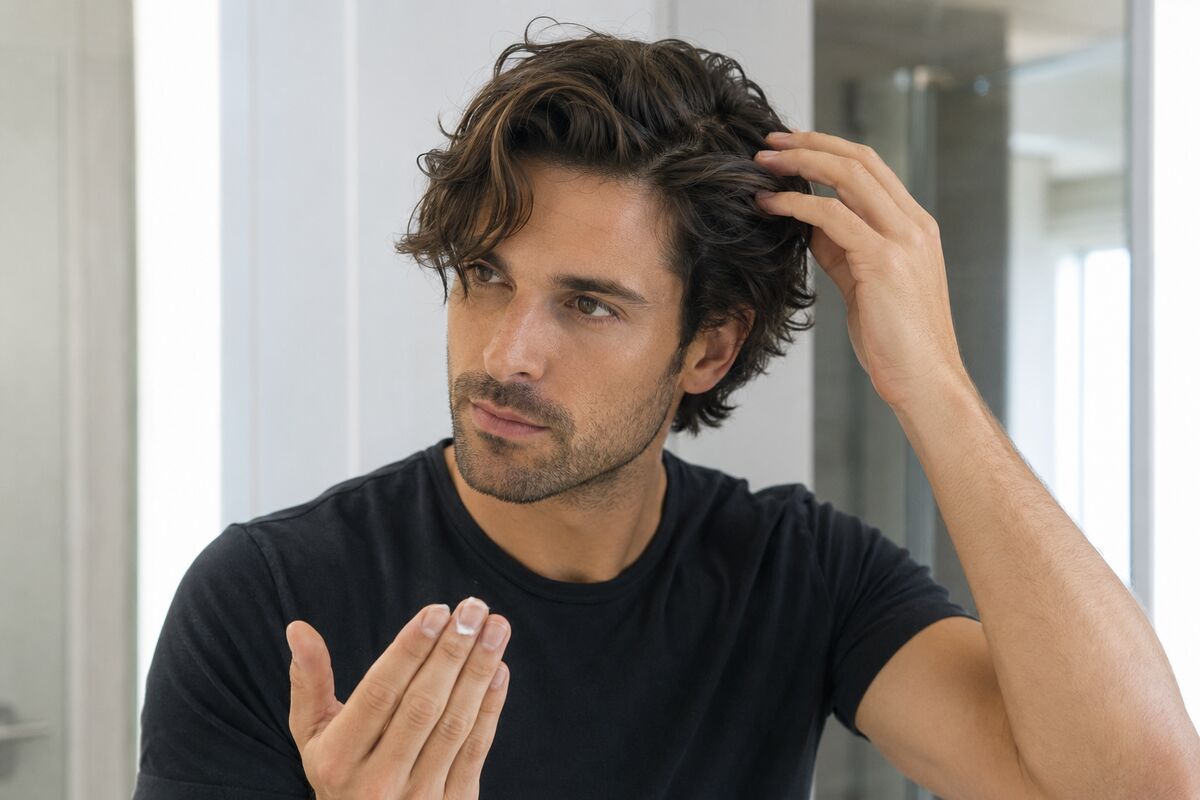
Do not comb the finished style. Dry brushing separates the wave groups and creates excess volume.
How to Create the Look on Straighter Hair
Straight hair cannot reproduce the same daily result without additional styling. The haircut can create movement, but it cannot manufacture a natural curl pattern.
Apply heat protectant before using a hot tool. A 25 to 32 mm curling iron creates loose bends rather than tight ringlets.
Wrap sections in alternating directions. Leave the final 2 to 3 cm of each end outside the barrel.
Allow every section to cool before separating it. Breaking warm curls immediately causes them to drop faster.
This hot-tool method is an adaptation. It is not a documented part of Chalamet’s regular styling routine.
A soft body-wave perm can reduce daily styling on suitable hair. That service requires a professional consultation, elasticity test, and strand assessment.
Making the Hair Last Under Heat and Humidity
Red-carpet lighting can expose weak structure quickly. Excess wax melts, while heavy cream pulls the crown flat.
For longer hold, build support before the hair dries:
- Apply mousse close to the roots
- Diffuse with the roots lifted
- Let the hair cool in its final direction
- Use flexible spray beneath the front sections
- Keep heavy wax away from the crown
- Carry a small cream for controlling surface frizz
The goal is flexible memory, not a hard shell.
Strong hairspray across the entire surface makes the hair look fixed. It also removes the soft movement that defines the style.
Which Hair Types Suit the Cut?
| Hair Type | Suitability | Required Adjustment |
|---|---|---|
| Loose waves, types 2A to 2C | Excellent | Long blended layers and light texture product |
| Loose curls, type 3A | Excellent | Preserve extra length to allow for shrinkage |
| Straight, medium-density hair | Moderate | Heat styling or professional texture service |
| Fine wavy hair | Good | Minimal internal thinning and lighter products |
| Thick wavy hair | Excellent | Strategic weight removal through the interior |
| Tight curls and coils | Adaptable | Recreate the silhouette, not the exact wave spacing |
| Damaged or highly porous hair | Limited initially | Improve condition before aggressive razoring |
Density is as important as texture.
Fine hair needs a stronger perimeter. Excessive layers can make the sides look transparent.
Dense hair needs internal weight removal. Otherwise, the crown sits flat while the sides expand.
Which Face Shapes Work With Timothée Chalamet Hair?
The cut can suit most face shapes because the parting and volume are adjustable.
Round Faces
Keep more height at the crown and reduce width directly beside the cheeks. An off-centre part creates useful asymmetry.
Long or Oblong Faces
Avoid excessive height. Allow the sides to remain fuller and let one or two curls fall toward the forehead.
Square Faces
Soft waves contrast with a defined jawline. Avoid cutting the sides too close, which can exaggerate facial angles.
Heart-Shaped Faces
Maintain movement near the temples and ears. A longer fringe can balance a broader forehead without hiding the face.
Oval Faces
Most variations work. The main decision is whether to emphasise volume, curtain-like separation, or a lower side-swept finish.
Maintenance and Hair-Health Reality
This haircut is low-precision, but it is not maintenance-free.
Book a reshaping appointment every 8 to 10 weeks. Very dense hair may need internal weight adjustment sooner.
Ask the stylist to preserve the front length during maintenance visits. Repeatedly shortening the fringe is the fastest way to lose the signature flow.
Use heat protectant whenever applying direct heat. Keep iron temperatures as low as your hair will respond to.
Regular conditioning is essential. The haircut exposes the ends throughout the silhouette, so dryness becomes visible quickly.
Clarify when product buildup makes the waves feel coated or unresponsive. Do not clarify on a fixed schedule if the scalp and hair remain clean.
Why This Haircut Often Goes Wrong
The biggest problem is overcutting.
A stylist may remove too much length because the wet hair appears heavy. Once dry, the wave contracts and the haircut becomes far shorter.
Other common errors include:
- Adding a skin fade beneath the longer top
- Cutting a short, uniform fringe
- Thinning the ends until they look wispy
- Creating many short crown layers
- Applying heavy pomade at the roots
- Brushing the hair after it dries
- Curling every section identically
- Removing all weight around the ears
The successful version retains enough density to look effortless rather than feathery.
The Latest 2026 Update
Chalamet continues to change his hair for appearances and film work. Allure documented a buzz cut in October 2025, which contrasted sharply with his established longer curls.
By May 2026, British GQ described a shaped mini mullet with lifted waves at the front, natural sides, and additional length at the back.
In July 2026, Vogue again noted his curly hair during a World Cup appearance.
The precise silhouette changes, but the recurring principles remain consistent: natural texture, visible movement, soft sides, and minimal over-styling.
Broader 2026 grooming coverage also continues to favour longer men’s hair, full curls, shags, and lived-in growth.
Frequently Asked Questions
What is Timothée Chalamet’s haircut?
Timothée Chalamet’s signature haircut is a medium-to-long layered wavy flow. It has longer front sections, connected scissor-cut sides, and a soft, textured perimeter. A documented 2018 version used long razor-cut layers that were slightly longer in front.
How do I ask for a Timothée Chalamet haircut?
Ask for a medium-length layered cut that follows your natural wave pattern. Keep the front longer, preserve weight around the ears, and avoid a tight fade. Request blended internal texture rather than short, choppy layers.
How long does hair need to be for this style?
The hair should be long enough to display a complete wave. For most people, that means roughly 10 to 16 cm through the top and front. Stronger curls require extra length because they shrink more after drying.
Can straight hair get Timothée Chalamet’s hairstyle?
Straight hair can copy the silhouette, but the waves require styling. Use a 25 to 32 mm curling iron with heat protectant, or discuss a professional body-wave service. The natural finish will require more daily work than it does on wavy hair.
What products create Timothée Chalamet’s hair?
Use lightweight curl cream, texture spray, flexible paste, and a light grooming cream. Jamie Taylor has specifically discussed salt spray, paste, and grooming cream for natural, textured men’s styling. Avoid heavy gel or oily pomade at the roots.
Does the haircut need a fade?
No. The signature version keeps natural length around the sides and ears. A fade creates a sharper, more disconnected silhouette. It can be a personal adaptation, but it will not reproduce Chalamet’s soft, connected flow.