

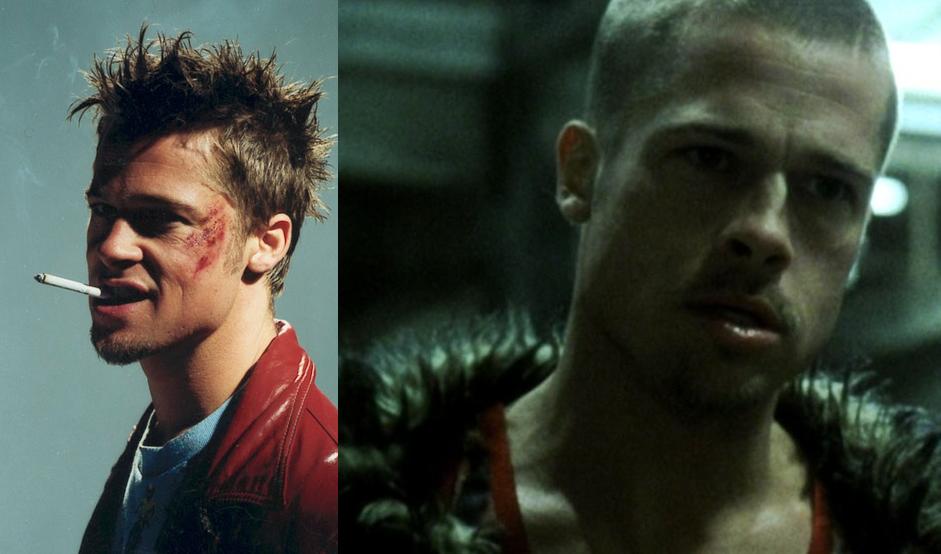
The Tyler Durden haircut is still one of the most copied—and most misunderstood—men’s hairstyles of all time. Twenty-plus years after Fight Club, guys are still walking into barbershops asking for “Brad Pitt hair” and walking out with something that looks… corporate.
That’s the problem.
Most men try to recreate a 1999 grunge haircut using 2026 barbershop logic. If you ask for a skin fade, sharp lineup, or anything “clean,” you’ve already missed the point.
Tyler Durden’s hair wasn’t polished. It was controlled chaos. It looked accidental, a little reckless, and borderline unfinished—on purpose. Below is the definitive guide to getting it right.
The Technical Anatomy: What to Actually Tell Your Barber
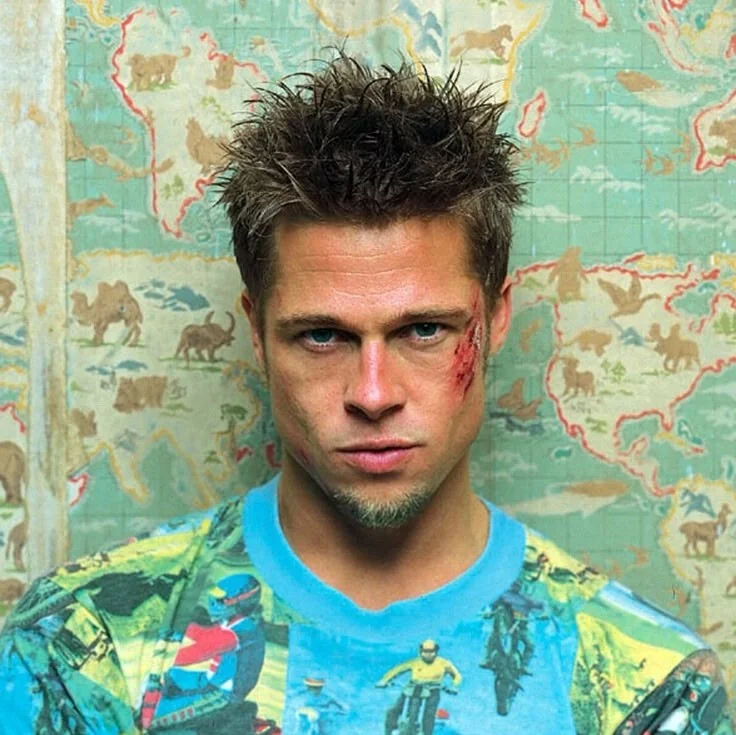
Tyler’s hair isn’t just messy. It’s architectural. The shape matters, but it can’t look intentional in a modern way. Clippers are the fastest way to ruin it.
If you want this cut to work, your barber needs scissors—and restraint.
Show them this:
“I’m looking for a shattered crop with no clipper work. Use point-cutting throughout the top to create three-inch peaks and valleys for high texture. On the sides, do a scissor taper and leave about an inch and a half so it doesn’t look like a fade. Leave the hairline and nape raw and natural—no razor lineup.”
If your barber looks nervous, that’s a good sign.
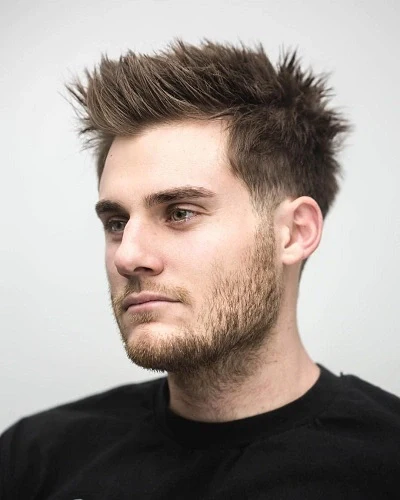
Why This Works
Point-cutting
Instead of cutting straight across, the barber snips vertically into the hair. This removes weight unevenly and creates that spiky-but-soft texture Tyler’s haircut is known for. It’s the difference between messy and designed to look messy.
The Anti-Fade
Fades look clean, modern, and intentional. Tyler’s haircut should look like it hasn’t been touched up in weeks. A scissor taper keeps length on the sides and avoids that “fresh barbershop” look. Basement haircut energy is the goal.
The Visual Difference (Why Most Guys Get This Wrong)
Here’s the easiest way to understand the gap between a modern mistake and the Tyler Durden approach:
| Feature | The “Corporate” Mistake | The Tyler Durden Way |
|---|---|---|
| Sides | Skin fade / Clipper guard #2 | Scissor taper (≈1.5 inches) |
| Texture | Uniform layers, blended | Point-cut “peaks and valleys” |
| Edges | Sharp razor lineup | Raw, natural nape and hairline |
| Finish | Polished, intentional | Slightly unfinished, lived-in |
| Product | High-shine pomade | Matte texture powder |
If your haircut looks clean from every angle, it’s wrong.
The Modern Product Stack (Because It’s Not 1999 Anymore)
Back in the day, this haircut survived on thick, sticky pastes that glued your hair into submission and smelled faintly toxic. Today, you can get the same grit and separation without the weight—or the shine.
The rule is simple: dry, matte, and a little dirty (visually).
If it looks healthy and glossy, you went wrong.
Step One: Sea Salt Spray (The Foundation)
Apply to damp hair and rough-dry it using your hands. No brush. No finesse. Sea salt spray gives your hair “tooth”—that slightly coarse grip that makes messy styles actually hold.
Solid, no-BS options:
- Davines This Is A Sea Salt Spray – Lightweight, gritty, zero shine. A favorite for fine to medium hair.
- Sachajuan Ocean Mist – A classic. Adds texture without making hair feel crunchy or greasy.
- Byrd Sea Salt Spray – A bit more grip, great if your hair collapses easily.
Your hair should feel slightly unpleasant at this stage. If it feels soft and touchable, you haven’t used enough.
Step Two: Texture Powder (The Finisher)
Once the hair is fully dry, puff a small amount of texture powder directly into the roots and mid-lengths. This is what creates the matte-collapse effect—lift without polish, structure without effort.
Reliable choices:
- Schwarzkopf Osis+ Dust It – Strong grit, very matte. Use sparingly unless you want full chaos.
- Got2b Powder’ful – Affordable, effective, and surprisingly good for straight hair.
- Uppercut Deluxe Styling Powder – Clean, dry texture without that chalky overload.
Work it in with your fingers and stop early. Overdoing powder is how you end up looking styled instead of lived-in.
Avoid anything with shine.
Pomades, glossy clays, “natural finish” creams—skip them all.
If light reflects off your hair, congratulations: you’re a Space Monkey, not Tyler Durden.
Compatibility Check: Will This Cut Work for You?
This haircut isn’t universal, but it’s adaptable.
Receding Hairline — Low Compatibility
Keep the fringe forward and choppy. The irregular texture helps mask the temples better than clean lines ever will.
Straight or Fine Hair — Medium Compatibility
You’ll need more sea salt spray than you think. Volume is the challenge here.
Thick or Wavy Hair — High Compatibility
This is the ideal hair type. Let the natural bulk and movement do the heavy lifting.
Round Face Shape — Medium Compatibility
Ask for more height on top to elongate your profile. Flat Tyler hair doesn’t work on round faces.
The Lived-In Styling Hack (This Matters More Than You Think)
Tyler Durden’s hair should never look “fresh.” Once you’re done styling:
- Put on a beanie for 5–10 minutes.
- Take it off and shake your head like you’re drying rain out of your hair.
- Use your fingers—never a comb—to pull a few strands down over your forehead.
This collapses the structure just enough to remove the try-hard look. It should feel like you accidentally nailed it.
Final Checklist Before You Commit
- No clippers. Scissors only.
- Point-cutting for shattered texture.
- Matte products. Zero shine.
- Natural edges—no sharp lineups on the neck or sideburns.
If your haircut looks slightly unfinished, a little chaotic, and like you didn’t care that much—then you did it right.
That’s the first rule.
