

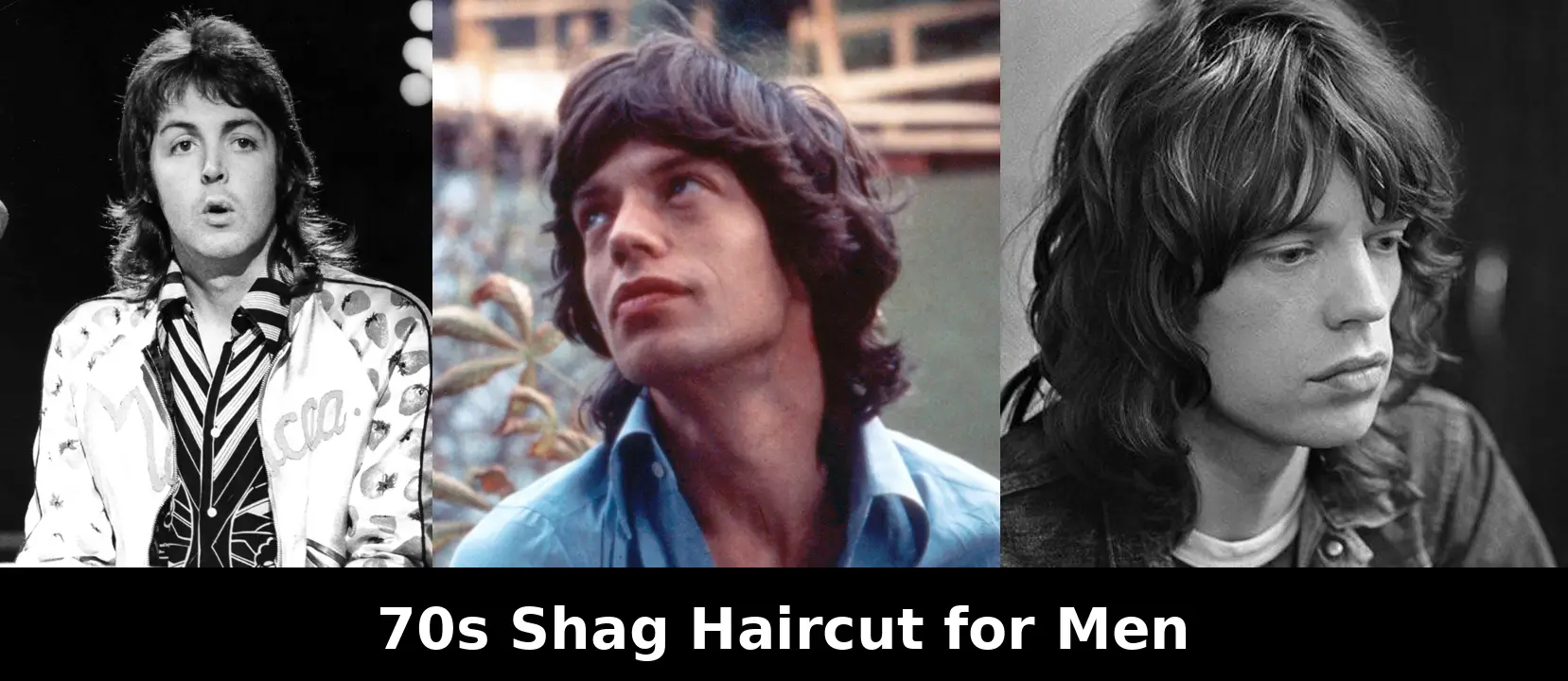
The 70s shag haircut for men isn’t just a hairstyle. It’s an attitude. A little messy, a little rebellious, and somehow still cool decades later. While trends come and go every year, the shag keeps circling back because it does something most men’s cuts don’t: it looks intentional without trying too hard.
Originally born at the tail end of the 60s, the shag became the visual language of musicians, actors, artists, and anyone quietly pushing back against clean-cut expectations. Fast forward to 2026, and the same haircut is back again—just slightly sharper around the edges.
This guide breaks down what the 70s shag actually is, how to wear it today, how to talk to your barber without sounding lost, and how to keep it looking effortless instead of chaotic.
What Defines a True 70s Shag Haircut for Men
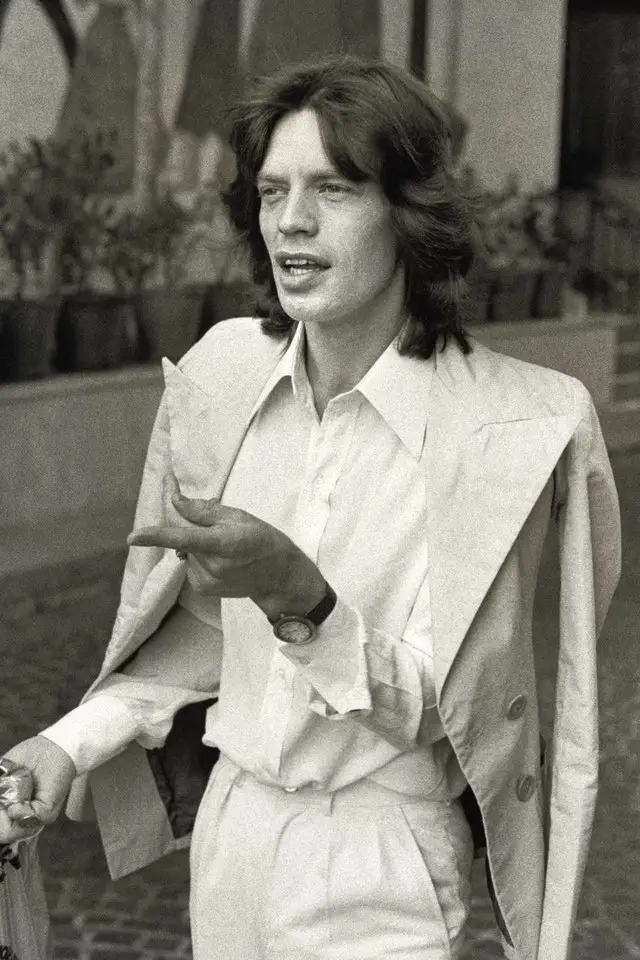
At its core, the shag is all about layers and movement. It’s not symmetrical, not polished, and definitely not flat. The cut is designed to move when you walk, shake your head, or run your hands through it.
Here’s what separates a real shag from a generic layered cut:
- Short, choppy layers at the crown for volume
- Longer lengths toward the nape, often wispy or feathered
- A messy fringe or bangs, never blunt
- Texture over precision, achieved through point-cutting or razors
The goal is controlled chaos. If it looks too neat, it’s missing the point.
The Cultural Roots Behind the Shag
The shag didn’t become iconic by accident. It was created around 1969 by barber Paul McGregor, who originally called it “The Funky.” That name alone tells you everything.
The haircut exploded in the early 70s because it matched the moment. Grooming standards were loosening, masculinity was being questioned, and style became personal instead of prescribed.
It helped that the shag landed on some very famous heads:
- David Cassidy, who made the soft, boyish shag mainstream
- Mick Jagger, whose wild version felt untamed and dangerous
- David Bowie, who pushed the shag into androgynous, futuristic territory
The style even crossed gender lines. Jane Fonda wore a shaggy cut in the 1971 film Klute, cementing the shag as one of the first truly unisex mainstream hairstyles.
Iconic Variations of the 70s Shag
Not all shags look the same. In fact, the haircut’s flexibility is the reason it has survived so long.
The Classic Shag
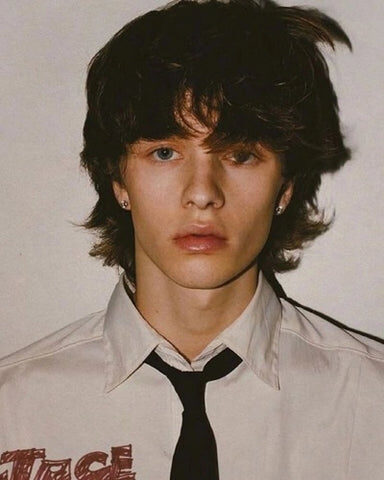
This is the David Cassidy version. Medium length, full fringe, soft feathering around the face. It works best for straight to lightly wavy hair and has a youthful, laid-back feel.
The Rockstar Shag
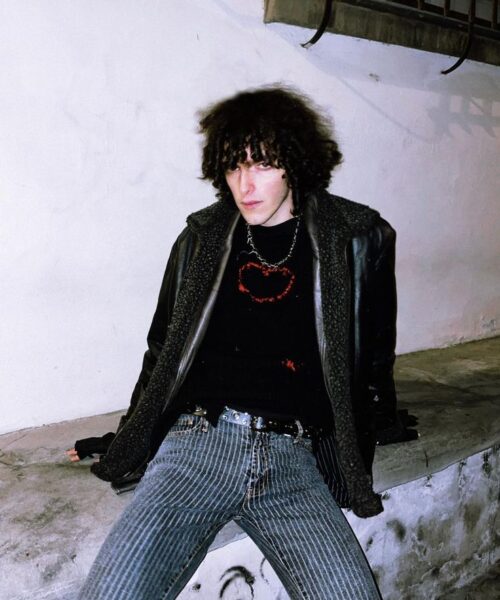
Louder, messier, and unapologetic. Think Jagger or Bowie. Heavy crown volume, dramatic layers, and texture everywhere. This version thrives on movement and doesn’t care if a few strands fall out of place.
The Shaggy Mullet
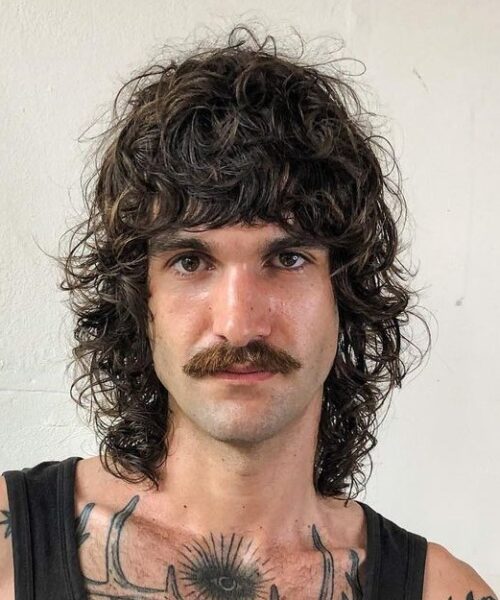
A natural evolution. Short and choppy on top, noticeably longer at the back. It walks the line between shag and mullet and has made a strong comeback in modern street style.
The Curly Shag
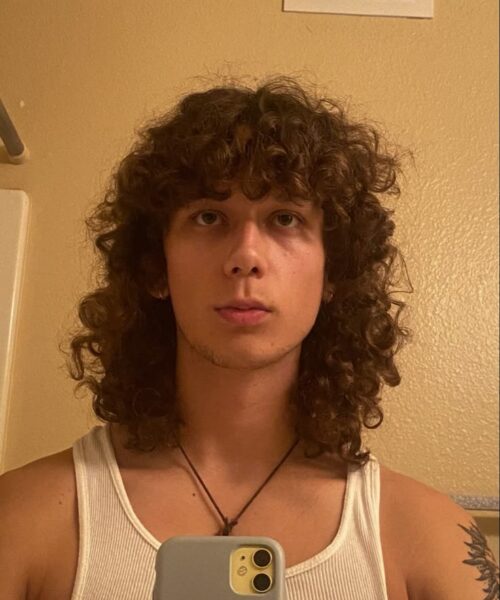
Designed to remove bulk without killing bounce. Layers are cut to enhance curl pattern rather than flatten it. When done right, it looks effortless and full of life.
Modern Shag Haircuts Inspired by the 70s
The 2026 version of the shag hasn’t lost its soul, but it has adapted to modern lifestyles.
Wolf Cut
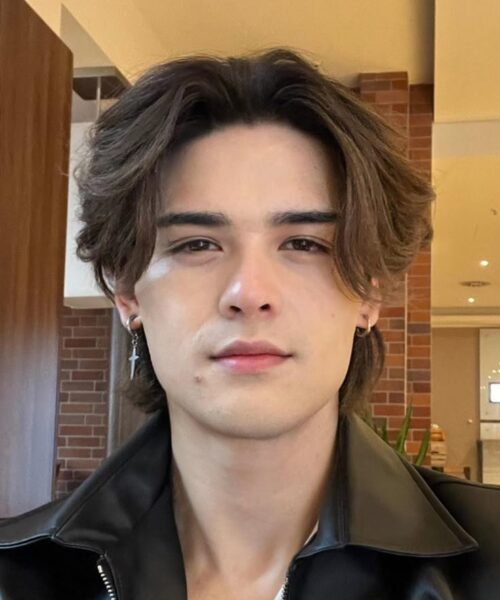
A sharper contrast between top and bottom. Short, aggressive layers at the crown with longer lengths trailing down. Edgier, more fashion-forward, and popular with Gen Z.
Textured Shag with Fade
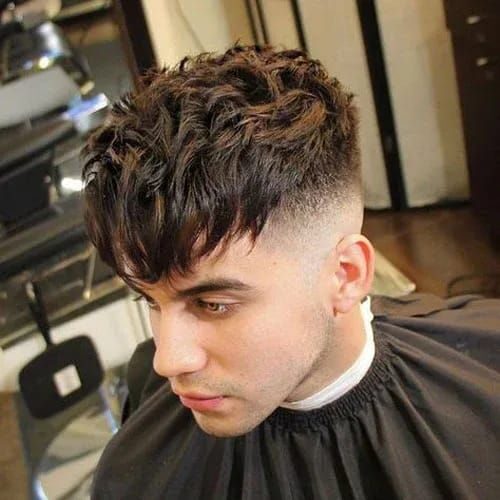
Loose, shaggy layers on top paired with a subtle fade on the sides. This version works surprisingly well in professional environments while still keeping that rock-and-roll edge.
Modern Business Shag
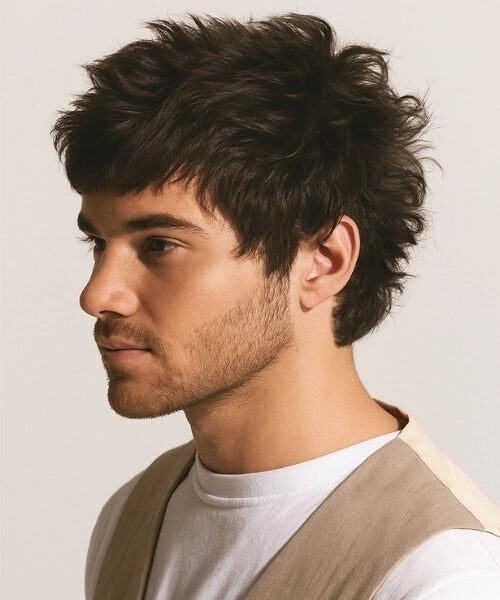
Cleaner lines, controlled ends, and less extreme layering. It’s the shag for guys who want movement without looking like they’re on tour with a band.
Matching the Shag to Your Face Shape
The shag is forgiving, but small adjustments make a big difference.
- Oval faces can handle almost any version, from short to shoulder-length
- Round faces look best with longer layers and vertical movement to elongate the face
- Square or angular faces benefit from softer layers and side-swept bangs
- Heart-shaped faces need more fullness near the jaw and nape
A good shag frames the face instead of hiding it.
Before You Get the 70s Shag Haircut
The 70s shag haircut for men looks relaxed, but it actually needs a solid starting point to work properly. Going in unprepared is how most people end up disappointed, even if the barber is skilled.
Length is non-negotiable.
A shag needs room to move. If your hair is too short, the layers won’t stack correctly and the cut will fall flat. In most cases, you want at least 3–4 inches on top and enough length on the sides and back to taper naturally. Trying to force a shag out of a tight fade almost always leads to awkward proportions.
Hair type affects daily effort.
The shag adapts well, but not equally for everyone. Very fine or ultra-thin hair usually needs product every day to avoid looking limp. Extremely straight hair often needs heat styling to create movement, while very thick or coarse hair can balloon outward if the layering isn’t controlled. The cut still works — it just demands awareness.
Your lifestyle matters more than Instagram.
This is where honesty helps. If you train at the gym daily, sweat will collapse crown volume. If you live in a humid climate, feathered layers can frizz without the right product. And if you hate blow dryers or styling altogether, the shag may feel high-maintenance despite its messy reputation. Most good shags take five to ten minutes of styling, not zero.
Styling the 70s Shag Without Overdoing It
This haircut should never look stiff. The best shags feel slightly undone, even on a good day.
Product Pairings That Actually Work
- Fine or flat hair: Volumizing mousse on damp hair, followed by texture powder at the roots
- Wavy or curly hair: Sea salt spray plus diffuser drying on low heat
- Thick hair: Matte clay or wax to separate layers without greasiness
Avoid shiny pomades. They kill the natural movement that makes the shag work.
The Feathered “Flip” Technique
Use a medium round brush while blow-drying to flick the sides back and away from your face. This creates that classic 70s feathering without looking styled to death.
How to Talk to Your Barber and Get It Right
Walking into a barbershop and asking for “a shag” can go sideways fast. Be specific.
Mention these terms:
- Feathered layers at the crown
- Point-cutting, not blunt ends
- Razored texture for a lived-in feel
- Clear instructions about the nape, especially if you want length at the back
Bringing reference photos—especially of classic 70s looks—helps avoid confusion.
What Can Go Wrong With a 70s Shag Haircut
The shag’s biggest strength — its looseness — is also what makes mistakes obvious over time. Knowing the common failures upfront saves you from a lot of frustration.
It slowly turns into a mullet.
This usually happens when the back is left long without enough crown contrast. If the top isn’t cut short and choppy enough, the length at the nape starts to dominate the shape. Even people who swear they “don’t want a mullet” can end up with one if balance isn’t nailed.
Layering issues show up late.
A shag can look great when you leave the chair and fall apart weeks later. Over-thinning leads to stringy ends, uneven layers collapse as the hair grows, and fringes split in odd places instead of framing the face. If a shag only looks good for the first week, the cut wasn’t built to last.
Too much thinning at the crown kills volume.
This is the most common technical mistake. When the crown is over-razored, the haircut loses lift almost immediately. Hair starts lying flat and clumping instead of moving freely. A proper 70s shag needs density at the top first, texture comes second.
A well-cut shag ages beautifully. A rushed one doesn’t. Understanding what can go wrong isn’t about fear; it’s about walking into the cut with realistic expectations and better control over the outcome.
Maintenance and Long-Term Care
Despite its messy look, the shag still needs upkeep.
- Trims every 6–8 weeks to keep the shape alive
- Avoid daily shampooing; natural oils add texture
- Use dry shampoo between washes for volume
Left alone too long, a shag doesn’t get cooler. It just turns into a mop.
Final Thoughts on the 70s Shag Haircut for Men
The 70s shag haircut for men survives because it doesn’t try to impress. It moves, it breathes, and it adapts to whoever’s wearing it. Whether you lean classic, rockstar, or modern, the shag rewards confidence more than perfection.
If you want a haircut that looks better the less you fuss over it, this one’s hard to beat. It was rebellious in the 70s, and in its own quiet way, it still is.
