

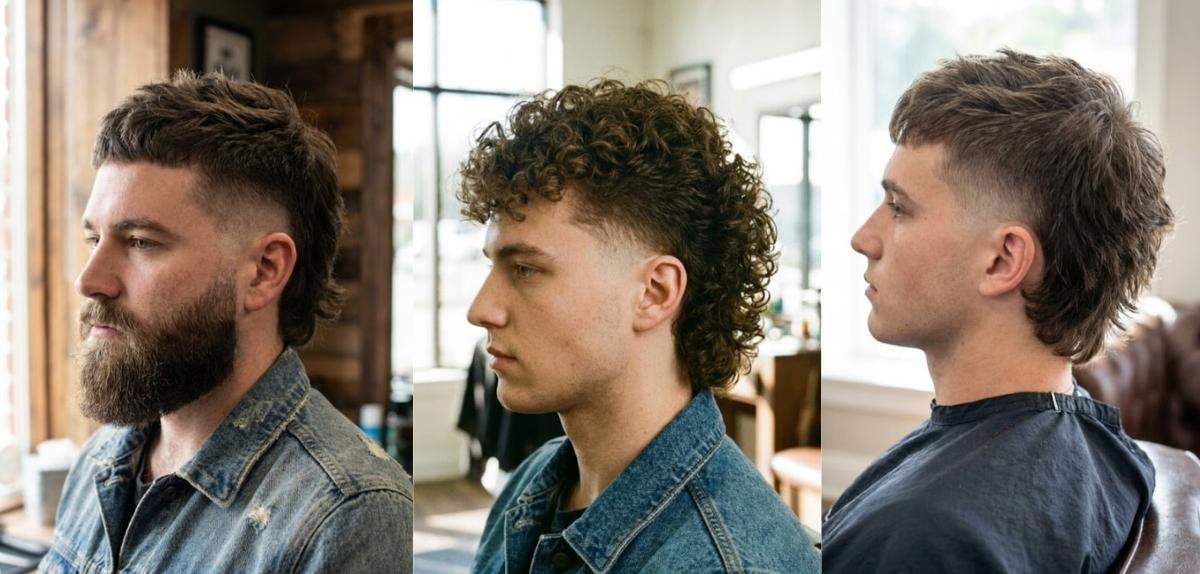
The burst fade mullet is one of those cuts that looks complicated, but once you understand the basics, it becomes very easy to personalise. It combines three ideas in one look:
- A burst fade that curves around the ear
- A shorter front and sides
- A longer back section that gives you that mullet “party” effect
Stylists and barbers keep saying that the modern mullet is fully back in fashion, driven by TikTok, social media and runway trends. British GQ even described the modern mullet’s resurgence as being written “on videos of young men showing off on TikTok (Source: British GQ).”
This guide will walk you through what the burst fade mullet is, the best styles, which face shapes it suits, and exactly how to talk to your barber so you leave the chair happy.
What Is A Burst Fade Mullet, Exactly?
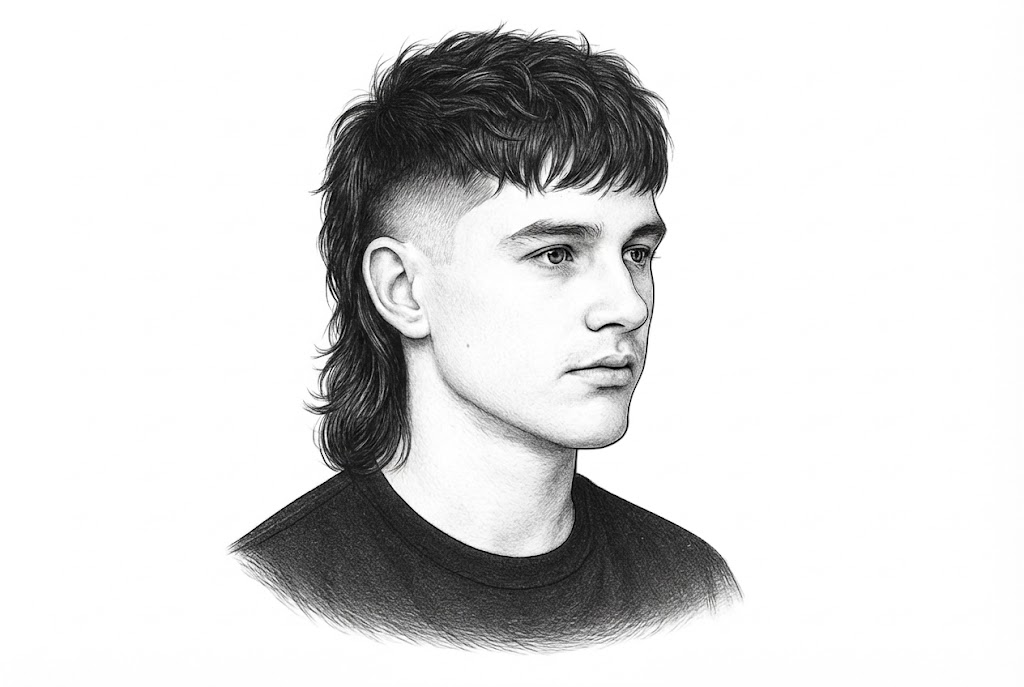
Let’s break the name down.
The burst fade
A burst fade is a fade that curves around the ear in a half-circle, creating a “sunburst” or “halo” effect instead of a straight vertical fade. It usually:
- Starts very short or to the skin at the edge
- Gradually increases in length as it moves up and behind the ear
- Blends into the hair at the back of the head
Grooming brand Forte Series describes it as a rounded fade that tapers neatly around the ear and neckline instead of straight up the sides.
The mullet
A mullet is a haircut where the hair is shorter at the front, top and sides, and longer at the back. The modern versions are usually softer, more textured and less extreme than old 80s mullets.
Put together: burst fade mullet
A burst fade mullet keeps:
- A curved burst fade around each ear
- Some length on top for styling
- A longer back that can be subtle or very dramatic
Think of it as a clean, modern frame around the face with a flowing back section that adds attitude.
Pros And Cons Before You Commit
Why people love the burst fade mullet
- High impact, low effort: The fade and tail do most of the visual work. Daily styling can be as simple as a bit of product and a quick shape-up.
- Very on-trend: From TikTok to footballers and musicians, mullet variations are everywhere again.
- Flexible in length: You can keep a modest, medium-length back for work, or grow a dramatic tail if your lifestyle allows it.
- Great for texture: Wavy and curly hair look especially good because the burst fade gives clean edges while the back stays full and soft.
Things to think about
- Fade upkeep: The burst fade area grows out faster than the back. To keep it crisp, you usually need a clean-up every 2–4 weeks.
- Work dress codes: In very strict or corporate settings, an obvious mullet tail may not be ideal. A “soft mullet” or shorter back section can be a safer version.
- Head shape and hairline: Cowlicks, low crowns and very strong growth patterns around the nape can change how the tail sits. That is why your consultation with the barber matters.
Interestingly, some UK salon owners have noticed a shift toward longer-lasting cuts like tapers and mullets as haircut prices have risen more than 30% since 2020. So if you want a style that keeps its shape longer between appointments, a well-designed burst fade mullet can make sense.
Best Hair Types for a Burst Fade Mullet
Good news: this cut is very adaptable.
Straight hair
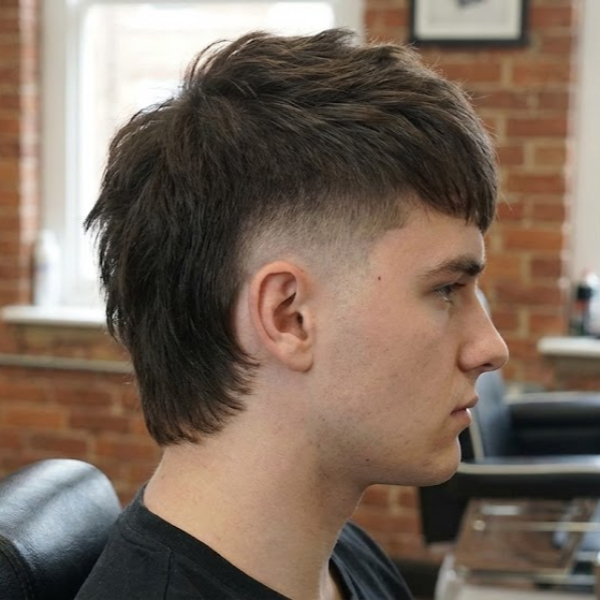
- Works best if you add layers and texture on top and in the back.
- Ask your barber for point-cutting or texturizing so the back does not sit like a flat sheet.
- Style with a matte clay or texture paste for grip and movement rather than shine.
Wavy hair
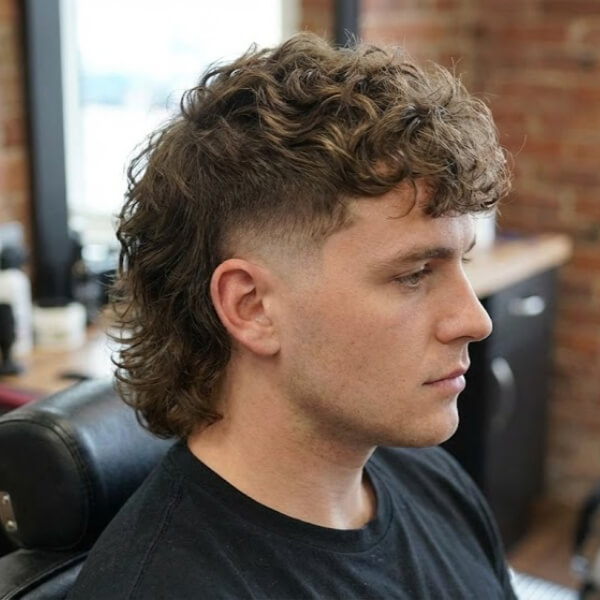
- Wavy hair is almost ideal. It naturally creates a soft, flowing tail.
- A mid burst fade keeps enough weight above the ear so the waves do not collapse.
- Use sea salt spray plus a light cream for that “lived-in” texture.
Curly hair
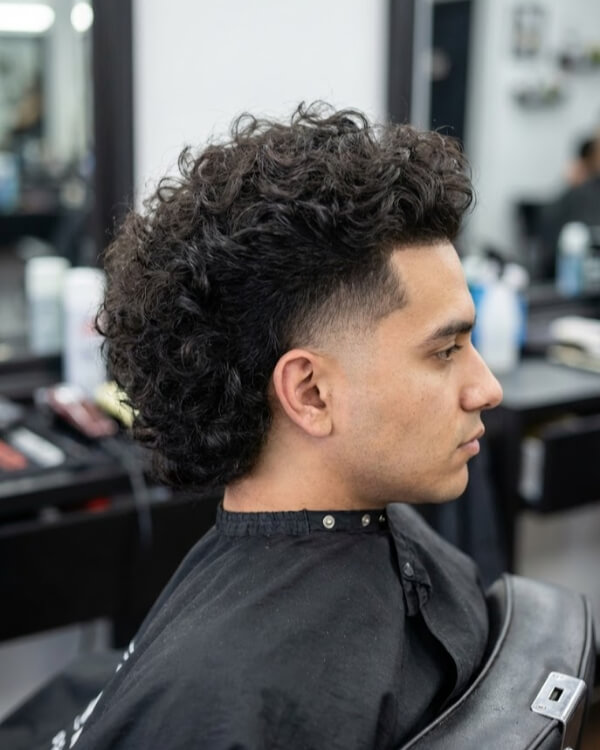
- Curly burst fade mullets are very popular because the fade frames the face and the curls create a big visual payoff at the back.
- Use a diffuser with low heat and apply curl cream or leave-in conditioner to avoid frizz.
Coily or Afro-textured hair
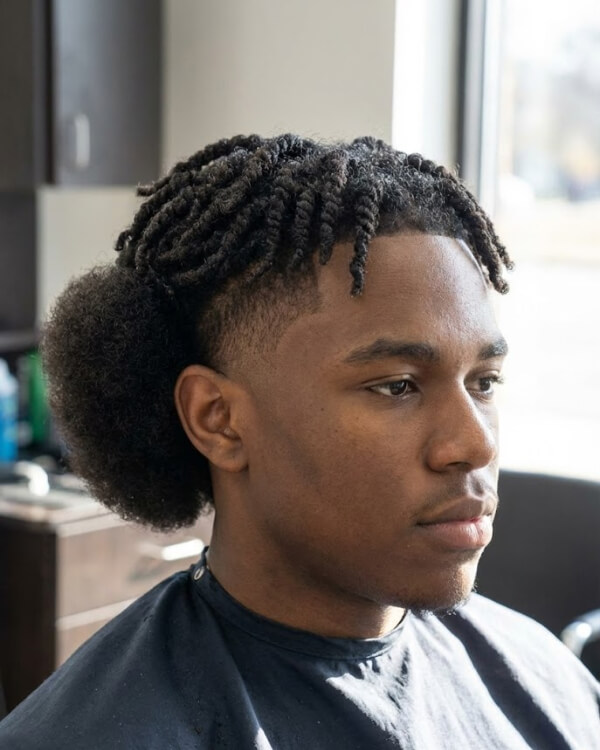
- A tight burst fade with a fuller crown and back can give a strong, sculpted silhouette.
- The rounded fade works nicely with rounded curls and coils, and many barbers use this for sporty, high-impact looks.
- Keep the scalp moisturised and use defining cream or butter for the back section.
Burst Fade Mullet Styles To Try
You do not have to copy one exact version. Use these ideas as starting points when you talk to your barber.
1. Classic Burst Fade Mullet
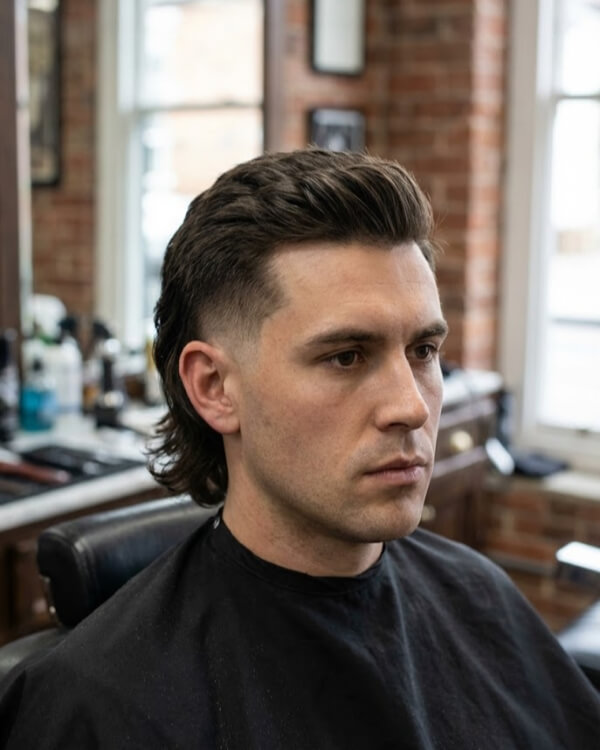
This is the “balanced” version:
- Rounded burst fade around the ears
- Medium length on top, styled back or slightly forward
- A back section that reaches just past the collar
It suits most hair types and is a good first step if you are new to mullets but want something clearly different from a standard fade.
2. Curly Burst Fade Mullet
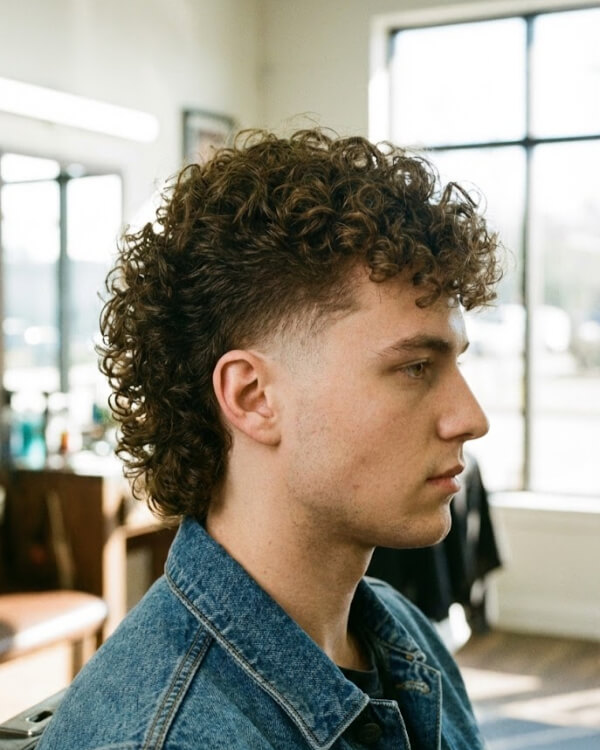
Great for wavy or curly hair:
- Tight burst fade keeps the sides clean
- Curls are left longer on top and at the back
- Shape is trimmed so the sides do not puff out
Use a diffuser, curl cream and a bit of texture powder if you want extra lift at the crown. Forte Series recommends this kind of cut to help curls stay defined while the fade keeps the outline sharp.
3. Burst Fade Mullet with Mustache or Beard
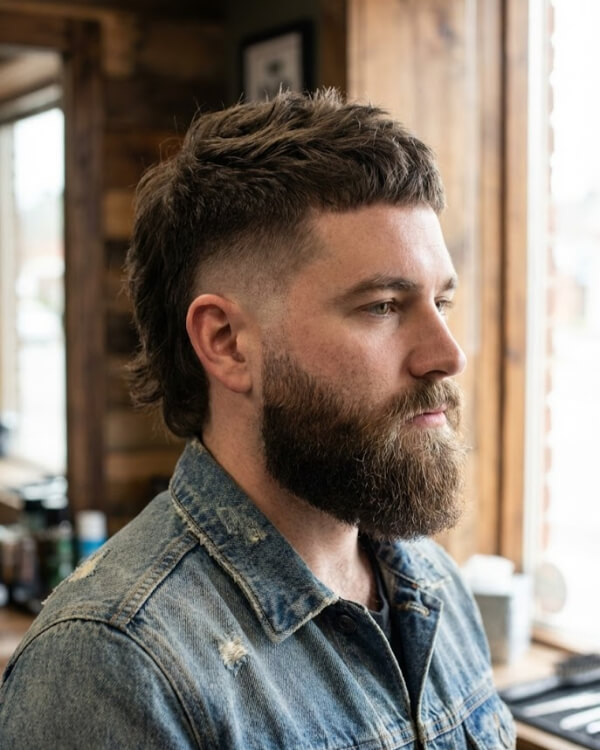
The mullet + moustache combo has become a big cultural trend in places like Australia, especially in sport. Adelaide Now Pair a rounded burst fade and mullet tail with:
- A strong moustache
- Light stubble, or a short, boxed beard
Ask your barber to blend the fade into the beard so there is no hard line where the sideburn should be. This makes the whole look feel more intentional and less like random pieces.
4. Low Burst Fade Mullet
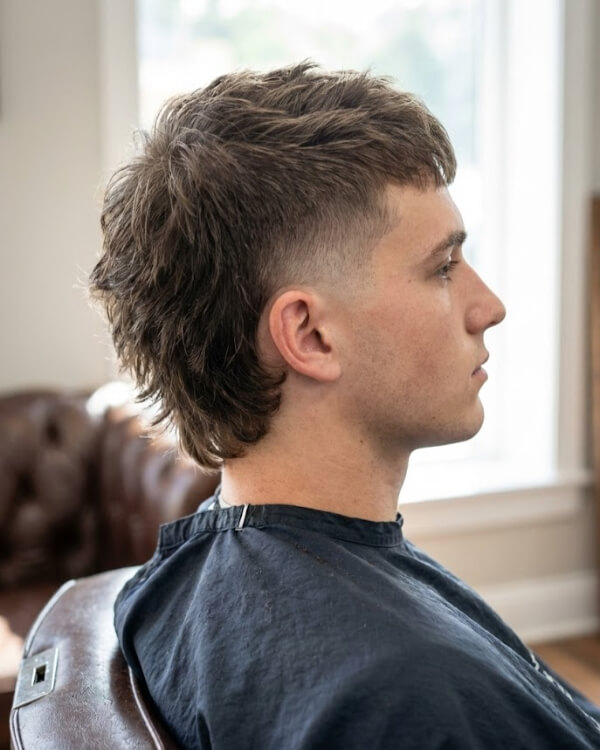
Here the fade:
- Starts lower around the ear
- Drops slightly into the nape
- Leaves more weight above the ear
This works well if you have a round face or thin hair, because it keeps the sides from getting too tight while still giving you that curved burst effect.
5. High Burst Fade Mullet
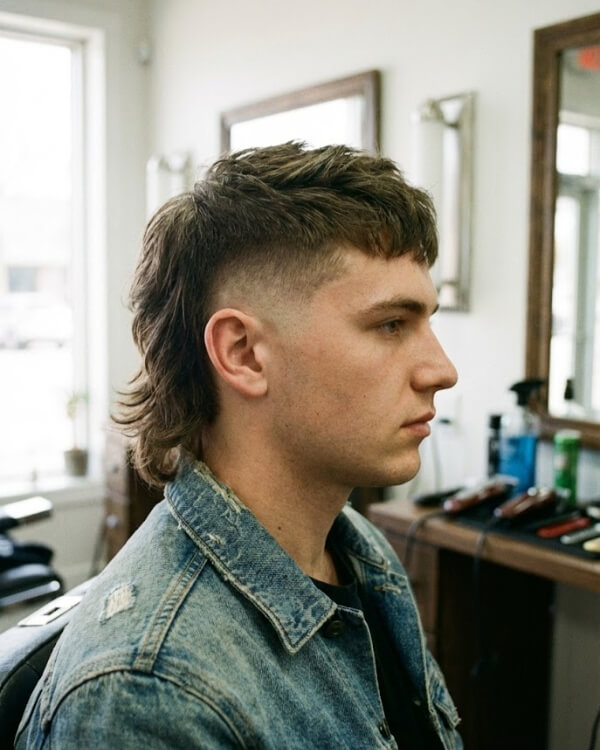
The high version:
- Starts closer to the temples
- Makes the fade area larger and more dramatic
- Puts extra focus on the top and tail
It suits thick hair and bolder personalities. If your face is very long, ask your barber not to add too much height on top, otherwise the whole look can stretch your features.
6. Burst Fade Mohawk Mullet
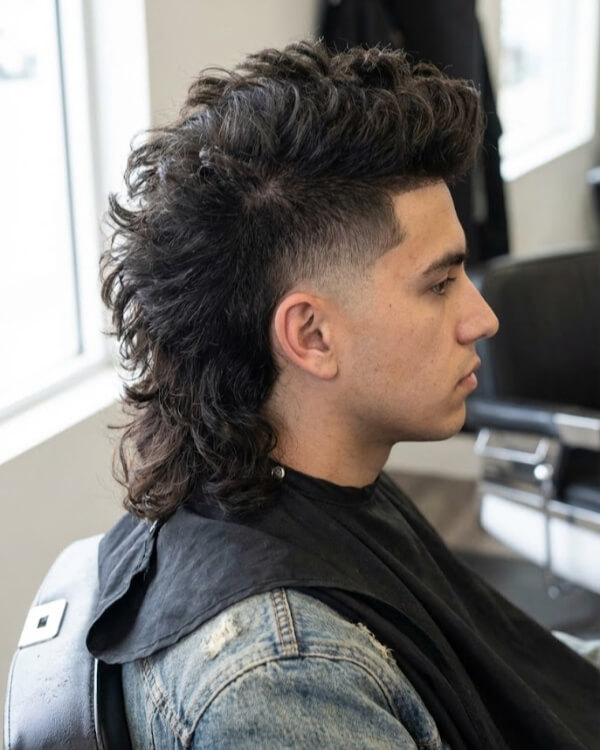
This is the loud, festival-ready option:
- Burst fade is tight around the ears
- Top is styled into a strip that runs down toward the back
- Tail is longer and more pointed
This mohawk-burst combination keeps the sides very clean while the centre line stays wild and textured.
7. Burst Fade Mullet With Design
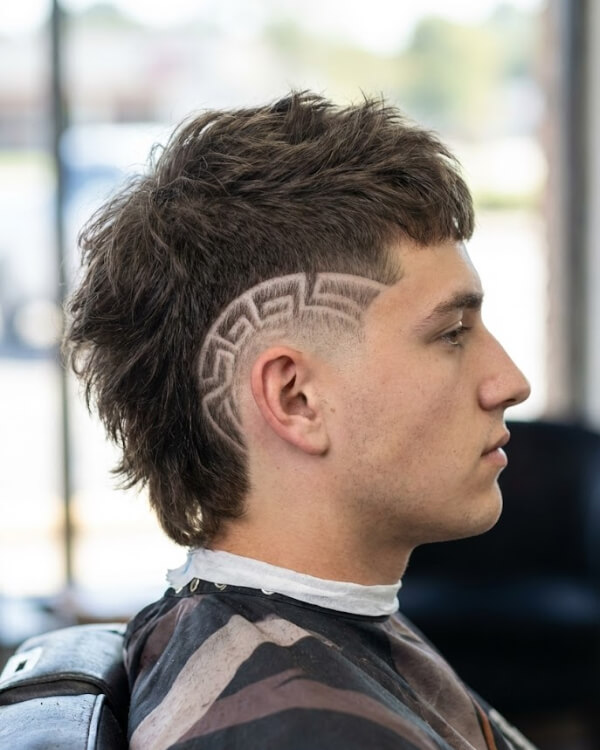
If you like creative hair art:
- Keep the burst fade tight enough to carve in razor lines or shapes
- Let the top and back stay slightly longer and softer
Ask your barber whether a simple curve, lightning bolt, or geometric line will work with your hair density. Designs need regular clean-ups, so be ready for more frequent appointments.
8. Textured Fringe Burst Fade Mullet
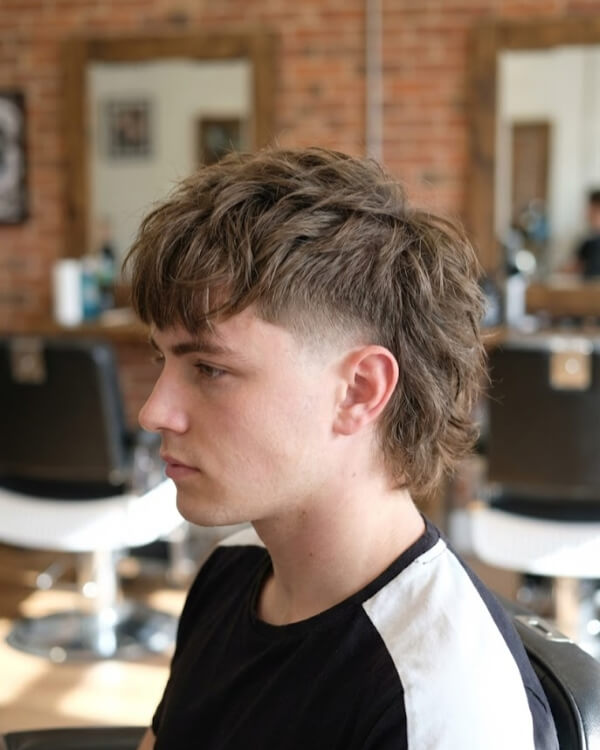
Instead of pushing everything back:
- Keep a messy, textured fringe at the front
- Blend it into a rounded burst fade
- Let the back sit at a medium length
This option is ideal if you have a large forehead or prefer hair falling slightly over the brow. A choppy fringe plus mullet tail has become common in modern K-inspired and TikTok looks.
Face Shape Guide: Does A Burst Fade Mullet Suit You?
The right version of this cut has to match your face shape, not just the trend. Barbers who specialise in fades keep stressing that a good fade should sharpen your features and balance proportions, not fight them.
Use a mirror and selfie to guess your face shape, then adjust the details below.
Oval Face
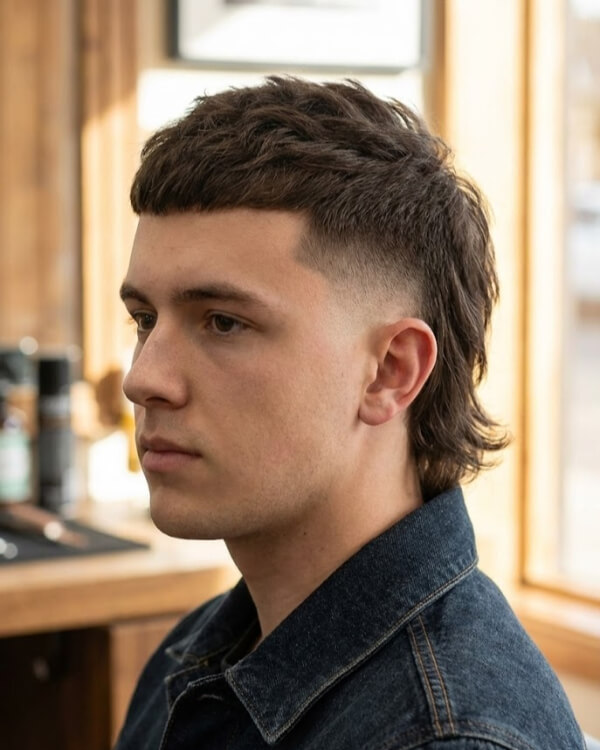
Good news: an oval face can wear almost any version.
- Try a classic burst fade mullet or curly version
- Keep the top medium in height
- The tail can be subtle or dramatic depending on your style
Just avoid extremes like very tall quiffs for everyday wear. You already have balanced proportions, so you do not need to correct much.
Round Face
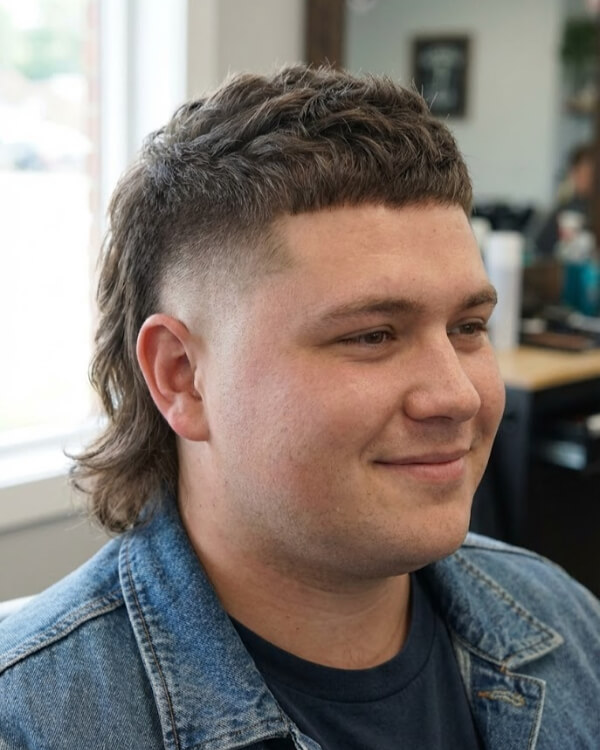
Goal: add height and angles, not width.
- Go for a mid or high burst fade, not too low, so the sides feel cleaner
- Add height through textured volume on top
- Keep the back a bit slimmer instead of very wide and bushy
Square Face
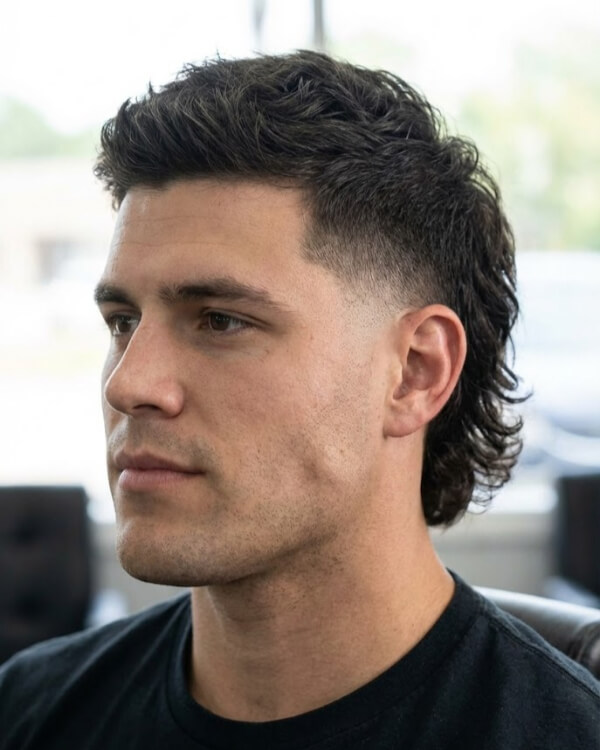
A square face already has a strong jaw and wide forehead.
- Use a mid burst fade so the corners of the hairline do not get too boxy
- Soften the top with texture rather than a flat, squared shape
- A slightly longer, layered tail can soften the overall outline
Ask your barber to keep some softness around the temples rather than sharp, straight lines everywhere.
Rectangle / Oblong Face
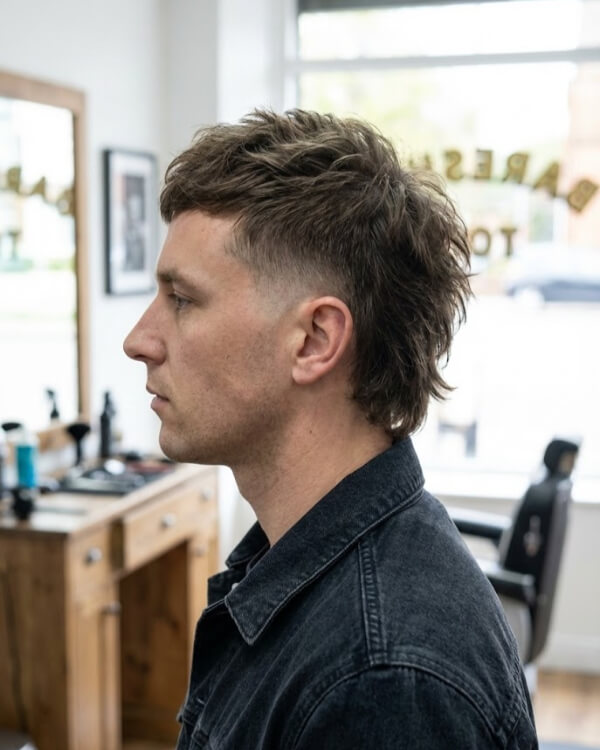
Here you want to avoid extra height that makes the face look longer.
- Choose a low burst fade that keeps more hair at the sides
- Keep the top at a medium height, styled more forward than up
- Grow a tail that is longer and fuller to visually balance the length of the face
A textured fringe can also help reduce the appearance of height.
Heart-Shaped Face
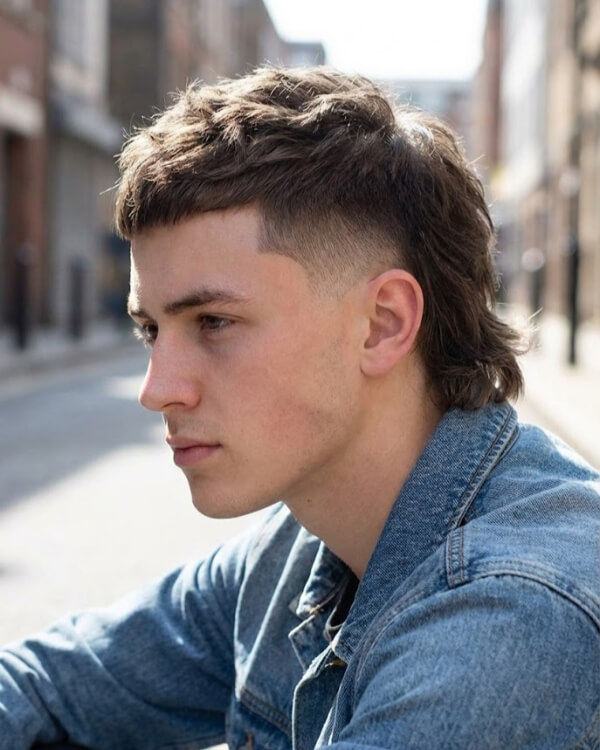
Heart-shaped faces are wider at the forehead and narrower at the jaw.
- Burst fades can work very well because the curve around the ears adds width near the cheeks
- Avoid too much volume at the crown; you already have width at the top
- A fuller, layered tail and some facial hair can add strength around the jawline
This shape often looks great with softer, shag-inspired mullet tails.
Diamond Face
Diamond faces have strong cheekbones and a narrower forehead and chin.
- Use the burst fade to soften the edges around the ears and widen the temple area
- Keep the top textured, not spiky, and avoid extreme height
- A curved, medium-length tail can balance sharp cheekbones
In short, there is almost always a way to tweak the burst fade mullet, so it works with your bone structure, as long as you and your barber are honest about what you are trying to highlight or soften.
How To Ask Your Barber For A Burst Fade Mullet
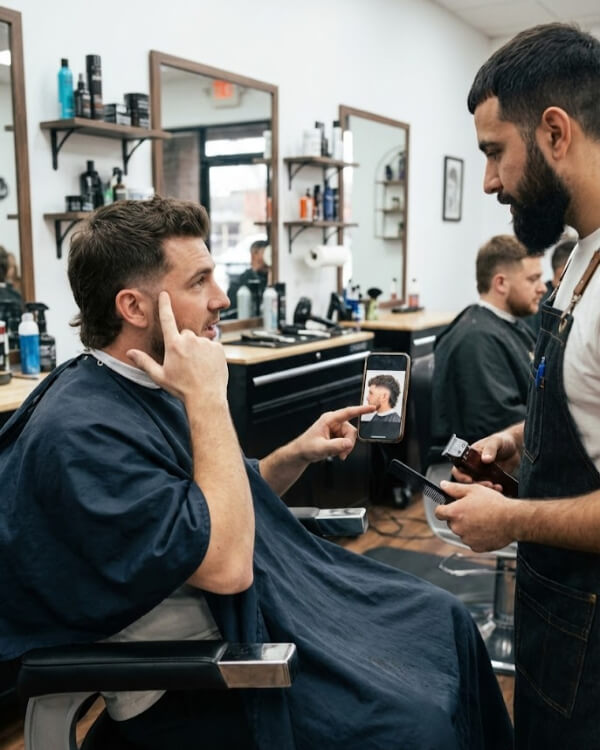
Walking in and just saying “burst fade mullet” is not enough. Give your barber clear, simple details.
1. Bring the right photos
- Save 2–3 reference photos: one front, one side, and ideally one back view.
- Point at the parts you like: “I like this length at the back” or “this height on top.”
Most barbers prefer real-life, well-lit photos over heavily edited Instagram filters.
2. Use simple wording
Here is a script you can adapt:
“I’d like a burst fade around the ears, starting very short and curving into the back, with a longer back section like a mullet. Keep some length on top so I can style it textured, not flat.”
If you know clipper guards, you can add something like:
- “Start at zero or 0.5 at the bottom of the burst”
- “Blend up to a 1.5 or 2 around the middle”
- “Leave about 3–5 cm on top and a medium tail at the back”
But do not stress too much over guard numbers; shape and length descriptions are more important.
3. Ask for face shape advice
Give your barber permission to adjust:
- “My face is quite round/long. What would you change in the fade height or the tail length to suit me better?”
Experienced barbers who run fade-focused shops often talk about tailoring the fade to the face, not copying a photo blindly.
4. Clarify neckline and side details
Decide:
- Neckline: natural, rounded or squared
- Sideburns: faded into the beard, left short, or removed
- Designs: yes or no for razor lines and patterns
A well-finished neckline can be the difference between a fresh mullet and an uneven one.
5. Talk maintenance before you leave
Ask:
- How often should I come back for a fade clean-up?
- How often should we shape the tail and layers?
- Which products should I use for my hair type?
You will get more value from the cut if you understand how to care for it.
Daily Styling And Maintenance
A burst fade mullet can be low fuss once you find your routine.
Basic styling routine
- Wash or rinse: You do not need shampoo every day, especially with dry hair. Use conditioner or a gentle shampoo a few times a week.
- Pre-style: Towel dry, then use a light mousse or sea salt spray for volume. GQ and other grooming experts often recommend this combo for modern, textured styles.
- Blow-dry:
- Straight hair: blow-dry while lifting the roots at the crown and smoothing the tail.
- Wavy/curly: use a diffuser on low heat to protect curl pattern.
- Finish:
- For natural texture, use a matte clay or texture paste.
- For curls, use curl cream or leave-in to define and reduce frizz.
Touch-up schedule
Because haircut costs have risen sharply in many places, more people now look for cuts that hold shape well between visits. A burst fade mullet can be managed like this:
- Fade clean-up: every 2–4 weeks, depending on how sharp you like it.
- Tail shaping: every 6–8 weeks to maintain weight and layers.
You can also ask for a “quick fade tune-up” where the barber mainly refreshes the burst area and neckline and leaves the tail longer.
Night and gym care
- If you have curls, sleep on a satin pillowcase or use a loose bonnet to reduce frizz.
- Tie the tail in a loose low band during workouts so sweat does not create tangles.
- Rinse or co-wash after heavy sweating, then restyle lightly.
Common Mistakes With Burst Fade Mullets (And How To Avoid Them)
1. Going too extreme too fast
If you are unsure, start with a shorter tail and softer fade. You can always add length later.
2. Ignoring your hairline and crown
Strong cowlicks at the back can make the tail flip in odd ways. Your barber may suggest a different length or extra layers to control this.
3. Choosing a fade that fights your face shape
For example, a high burst fade with lots of height on top can make a long face look even longer. A lower burst with more side weight usually works better.
4. Not using any product
Even a small amount of lightweight product can transform the shape, especially around the crown and tail. Dry, fluffy hair at the back can make the cut look unfinished.
5. Skipping follow-up visits
Letting a burst fade grow out for months turns it into a messy half-mullet, half-shag. Even a quick trim every few weeks keeps it intentional.
Final Thoughts
The burst fade mullet sits right where modern men’s hair is heading: sharp edges, personalised shape, and enough length to show personality. Hair pros keep pointing out that mullets are no longer a joke cut, but a flexible, trending style that has gone mainstream again.
If you match the fade height and tail length to your face shape, discuss maintenance honestly with your barber, and use a simple styling routine that suits your hair type, this cut can be both bold and surprisingly wearable.
When you are ready, collect a few reference images, pick one of the style variations above that feels closest to you, and go have that conversation in the chair. The party in the back is officially open.
