

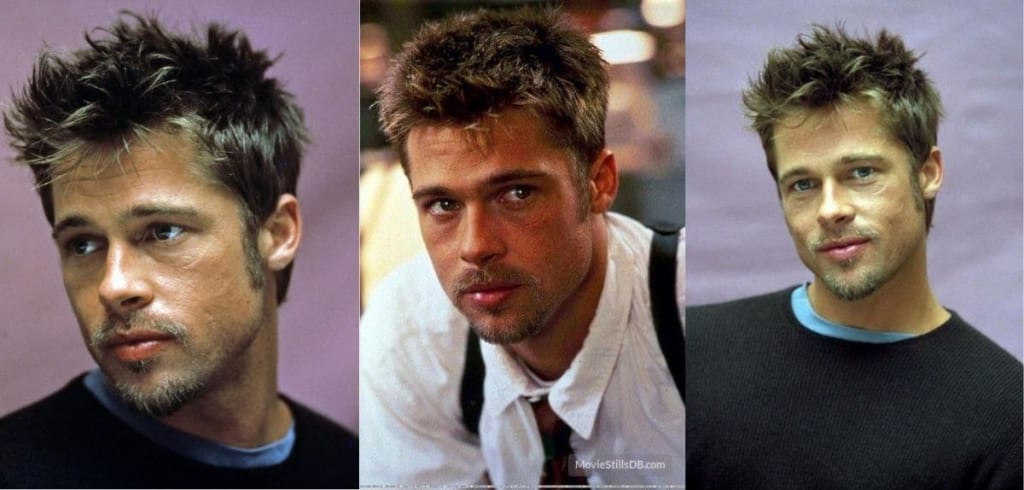
The Tyler Durden haircut isn’t clean. It isn’t polished. And that’s exactly the point.
Brad Pitt’s hair in Fight Club looks like it’s been slept on, cut in bad lighting, and styled with whatever was lying around. It feels reckless, almost accidental—but it’s not. There’s real intention behind why it works, and if you don’t explain it properly to your barber, you’ll walk out with something way too neat or way too short.
This guide breaks it down in plain English. No barber-school fluff. Just what actually matters.
Why the Tyler Durden Haircut Still Works
This haircut has survived decades because it hits a rare balance:
- Masculine but not aggressive
- Messy but not sloppy
- Short but not boring
It’s anti-corporate hair. The opposite of a LinkedIn fade. And it works especially well if you want something low-maintenance that still looks intentional.
That said, it’s also easy to mess up. Most people ask for “short and textured” and end up with a generic men’s cut. Tyler’s hair has weight, movement, and a slightly unwashed vibe that’s hard to fake.
The Overall Shape
At its core, this is a textured crop with a deconstructed finish.
Not a buzz cut.
Not a fade.
Not a clean taper you’d wear with a suit.
Think rough edges, uneven lengths, and a silhouette that looks better the messier it gets.
The Technical Specs to Tell Your Barber
If you want results, you need to be specific. Here’s how to explain it without sounding like you watched one YouTube video and got cocky.
The Cut
Ask for:
- A textured crop or deconstructed short haircut
- Emphasis on movement and irregularity
Avoid words like clean, sharp, or tight. Those are red flags.
The Sides
This is where most people screw it up.
What to ask for:
- Scissor-over-comb or a high guard (#4 or #5)
- A soft taper, not a fade
What to avoid:
- Skin fades
- High fades
- Anything “military”
Tyler Durden’s hair keeps visible weight on the sides, which gives it that street-level, lived-in look instead of something overly disciplined.
The Top
This is the soul of the haircut.
- Length: 2 to 3 inches
- Technique: Point cutting or razor work
- Finish: Jagged, uneven ends
The goal is not volume for volume’s sake. It’s broken texture. The hair should clump into small pieces instead of laying flat or puffing up.
If your barber mentions thinning shears only, push back gently. Razor or point cutting matters here.
The Nape
Small detail, big difference.
- Keep it natural or softly tapered
- No hard lines
- No squared-off neckline
A sharp neckline instantly kills the Fight Club vibe. Tyler’s hair always looks like it’s growing out, even when it’s freshly cut.
Key Phrases That Actually Help
Barbers understand vibe just as much as measurements. These phrases tend to land well:
- “Choppy and slightly disconnected”
- “Low-maintenance, messy on purpose”
- “Piecey texture, not fluffy”
- “I don’t want it to look clean”
If that last sentence makes your barber uncomfortable, that’s useful information.
Styling the Tyler Durden Haircut
This look lives or dies on product choice. Too shiny and you look try-hard. Too dry and it falls flat.
Here’s what actually works:
| Product Type | Why It Works |
|---|---|
| Matte Clay | Strong hold without shine. Gives that gritty, raw finish |
| Texture Powder | Adds instant friction and volume, especially on fine hair |
| Fiber Pomade | Slight “dirty” sheen if you want the true movie look |
How to Apply It (Quick and Dirty)
- Start with dry or slightly damp hair
- Use less product than you think
- Work it in with your fingers, not a comb
- Twist small sections randomly
- Stop before it looks “done”
The best Tyler Durden hair looks like you didn’t care—even though you kind of did.
Maintenance: Why This Cut Is So Forgiving
One of the best things about this haircut is how well it grows out.
- Looks good at 2 weeks
- Still works at 6 weeks
- Honestly fine at 8 weeks
As it grows, it just gets messier and more textured. That’s a feature, not a flaw.
If your hair is straight, you’ll get more of the spiky texture. If it’s wavy, even better—you’ll get natural movement without trying.
Bring a Reference Photo (Seriously)
Descriptions only go so far. Hair length in Fight Club changes scene to scene, but the loungewear and final act shots are the best references.
Pick one clear image. Not a collage. Not a blurry screenshot. One good still.
That single step eliminates 80% of miscommunication.
